8 Creative World Oceans Day Bulletin Board Ideas for Classrooms
by Digyfindy
Tags:
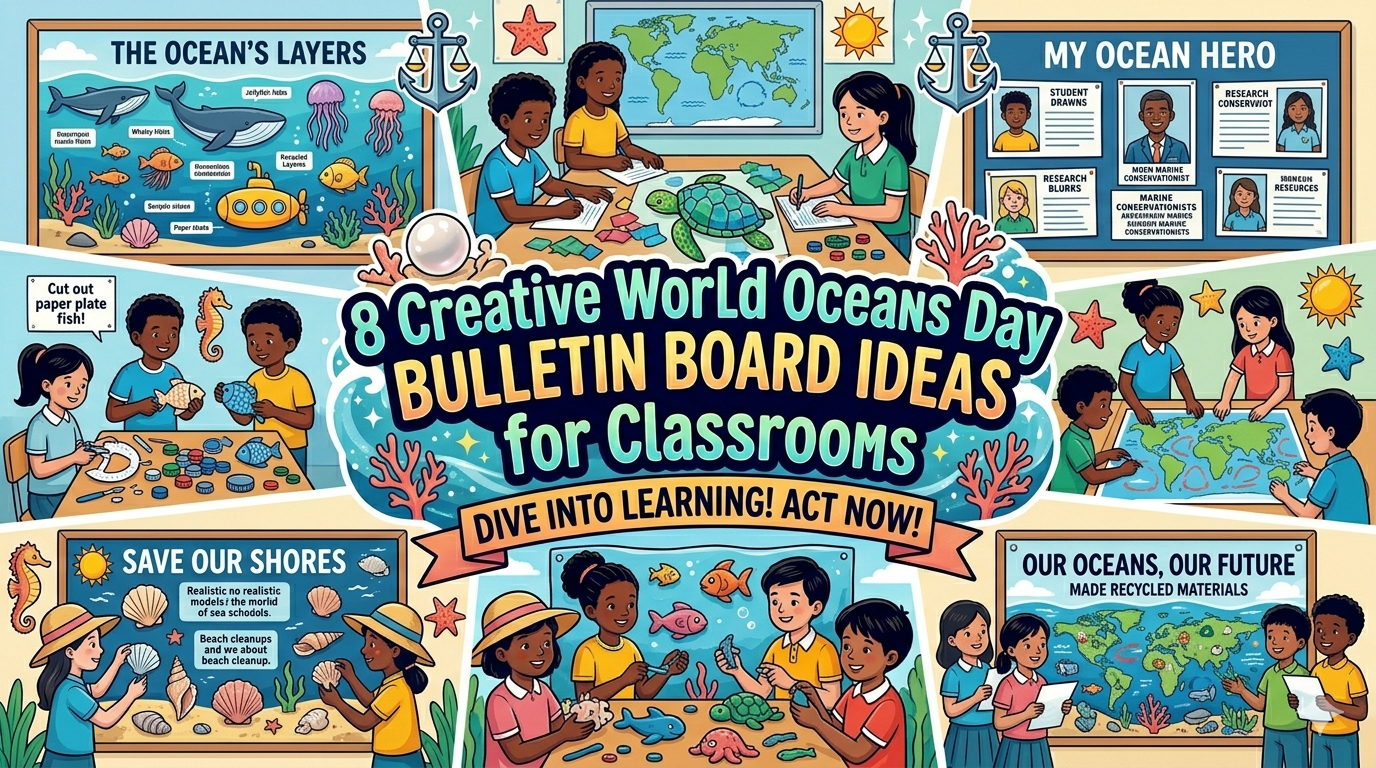
World Oceans Day, celebrated every year on June 8, is a wonderful opportunity to help students learn about marine life, ocean conservation, and the importance of protecting our planet. One of the easiest ways to bring this awareness into schools is through creative bulletin boards.
A well-designed display can transform a hallway, library, or classroom into an engaging learning space. Better yet, bulletin boards can encourage students to participate, ask questions, and remember important lessons long after the event is over.
If you are looking for affordable and engaging World Oceans Day bulletin board ideas for teachers, these creative concepts can help you create memorable displays without spending a fortune.
Making a Splash: Designing a Interactive Classroom Display
Students are surrounded by information every day, so visual displays need to be both attractive and meaningful.
An interactive bulletin board does more than decorate a wall. It encourages participation and helps reinforce classroom learning.
Research consistently shows that visual reinforcement can improve student engagement because learners are exposed to key concepts repeatedly throughout the day.
Benefits of interactive displays include:
- Increased student participation
- Better retention of facts and concepts
- Enhanced creativity and collaboration
- More opportunities for hands-on learning
- Improved classroom atmosphere
For World Oceans Day, consider adding elements students can write on, move, or contribute to over time. This transforms the bulletin board from a decoration into an educational experience.
3D and Eco-Friendly Bulletin Board Concepts
1. The "Caught in the Net" Recycled Plastic Display
This eye-catching display helps students understand the impact of plastic pollution on marine ecosystems.
Create a large ocean scene using blue paper as the background. Stretch a fishing net across part of the board and attach clean recycled plastic items such as:
- Plastic bottles
- Bottle caps
- Plastic straws
- Food wrappers
- Plastic bags
Add paper fish, turtles, and seabirds that appear trapped by the debris.
A headline such as "Caught in the Net: Help Keep Our Oceans Clean" can immediately grab attention.
You can also include simple facts about ocean pollution and encourage students to write ideas for reducing plastic waste.
2. "An Ocean of Potential" Student Pledge Board
This bulletin board focuses on positive action rather than environmental problems.
Create a large ocean background filled with paper fish, shells, waves, and sea creatures.
Provide students with fish-shaped paper cutouts and ask them to complete a pledge such as:
- I will recycle more often.
- I will reduce single-use plastics.
- I will pick up litter when I see it.
- I will teach others about ocean conservation.
As students add their pledges, the display grows into a colorful representation of collective action.
The title "An Ocean of Potential Starts With Us" works especially well for elementary and middle schools.
3. The Interactive Coral Reef (Using Tissue Paper and Cupcake Liners)
This display combines art and science in a creative way.
Use tissue paper, cupcake liners, construction paper, and recycled materials to create a three-dimensional coral reef.
Students can help build:
- Coral formations
- Seaweed
- Tropical fish
- Starfish
- Sea turtles
Attach fact cards throughout the reef explaining why coral ecosystems are important.
For added interaction, place questions around the board that students can answer during the week.
This project works particularly well in science classrooms.
4. Ocean Heroes Wall
Create a display highlighting individuals and organizations working to protect the oceans.
Include short profiles of:
- Marine biologists
- Conservationists
- Ocean researchers
- Environmental activists
Students can contribute by researching and adding new ocean heroes throughout the month.
This board demonstrates how individuals can make a difference.
Subject-Specific Ocean Board Themes
The Literacy Board: "Diving Into a Good Book"
Libraries and reading corners can participate in World Oceans Day too.
Create a bulletin board featuring ocean-themed books and reading recommendations.
Decorate the board with:
- Dolphins
- Whales
- Submarines
- Treasure chests
- Ocean waves
Each featured book can include a student-written review or recommendation.
Possible display titles include:
- Diving Into a Good Book
- Ocean Adventures Await
- Explore the Deep Through Reading
This display encourages literacy while supporting the World Oceans Day theme.
The Science Board: Understanding the Marine Food Web
A science-focused bulletin board can help students understand how ocean ecosystems function.
Use arrows and illustrations to show connections between:
- Phytoplankton
- Zooplankton
- Small fish
- Larger fish
- Sharks
- Marine mammals
Add simple explanations showing how each organism depends on others for survival.
Students can interact with the display by matching species to their correct place in the food web.
This turns the bulletin board into a hands-on learning station.
6. Ocean Fact of the Day Board
Dedicate a section of the board to daily ocean facts.
Examples include:
- The ocean covers more than 70% of Earths surface.
- Coral reefs support thousands of marine species.
- Blue whales are the largest animals ever known to exist.
Changing facts daily encourages students to return and learn something new.
7. Save Our Sea Creatures Display
Feature endangered marine animals and explain the challenges they face.
Students can create illustrations and write short conservation messages.
This display promotes awareness while encouraging empathy for wildlife.
8. Under the Sea Photo Booth Board
Create a bulletin board that doubles as a photo station.
Add a large cutout where students can place their faces and pretend to be:
- Divers
- Mermaids
- Sea turtles
- Marine scientists
Students love interactive displays, and photos can help spread awareness throughout the school community.
Materials Checklist for a Budget-Friendly Display
Creating an impressive bulletin board does not require expensive supplies.
Many materials can be found in classrooms or collected through recycling programs.
Useful supplies include:
- Construction paper
- Bulletin board paper
- Tissue paper
- Cupcake liners
- Markers and crayons
- Glue sticks
- Scissors
- String or fishing net
- Recycled plastic items
- Cardboard scraps
- Printable ocean images
Encouraging students to contribute materials can also make the project more collaborative and environmentally friendly.
Final Thoughts
World Oceans Day provides an excellent opportunity to combine creativity, environmental education, and student engagement. A thoughtfully designed bulletin board can spark curiosity, encourage participation, and reinforce important lessons about protecting marine ecosystems.
Whether you choose a recycled plastic display, an interactive coral reef, a science-based food web, or a student pledge wall, the most effective bulletin boards invite students to become active participants rather than passive observers.
With a little imagination and a few inexpensive materials, teachers can create memorable displays that inspire students to appreciate and protect our oceans long after June 8 has passed.