World Day Against Child Labour Speech: 3 Ready-to-Use Scripts for Schools
by Digyfindy
Tags:
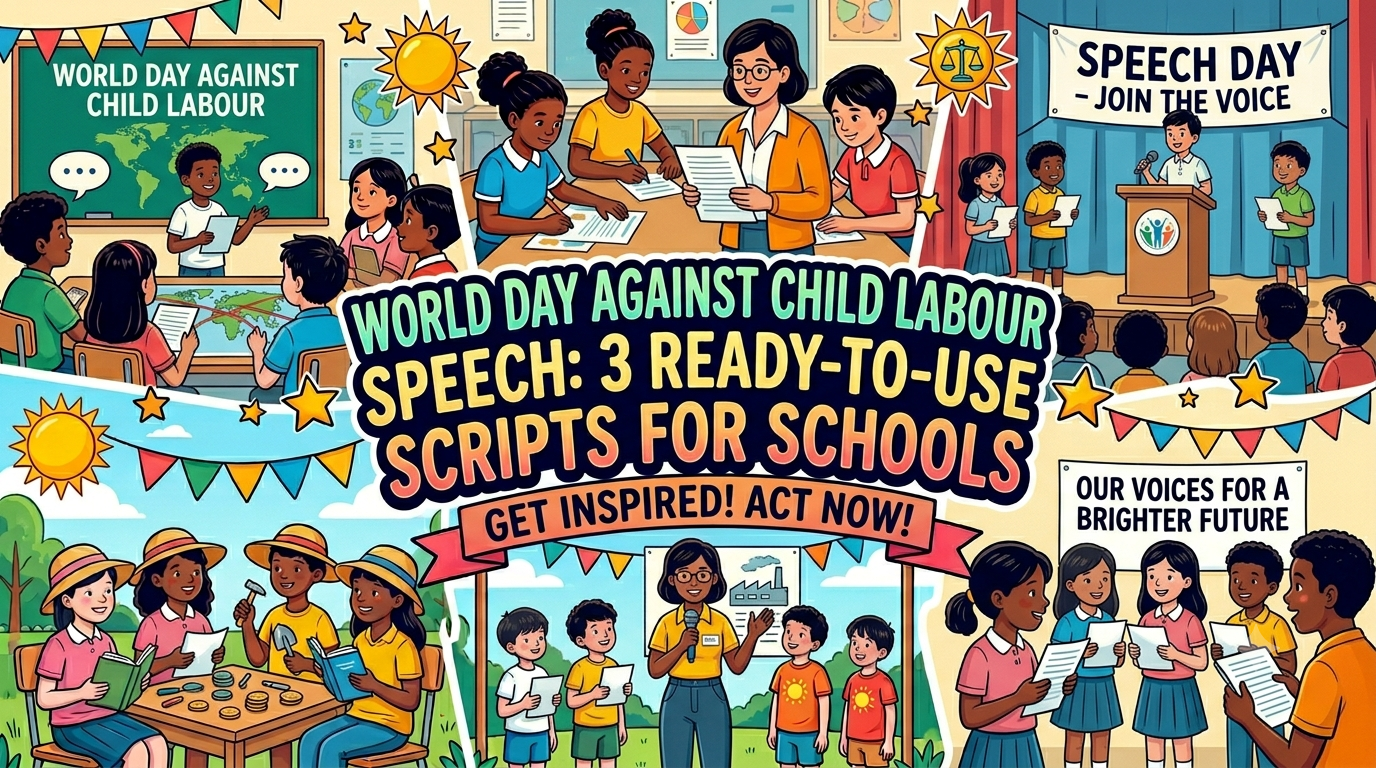
Every year on June 12, people around the world observe World Day Against Child Labour. Schools often mark the occasion through assemblies, classroom discussions, awareness campaigns, and student presentations.
One challenge many teachers and students face is finding a speech that is informative, age-appropriate, and meaningful. The topic can be emotional, so it is important to communicate the message in a way that educates rather than overwhelms.
This guide includes three ready-to-use speech scripts designed for different age groups and assembly formats. Whether you need a short speech for elementary students or a longer keynote for older students, you can adapt these examples to suit your audience.
How to Deliver a Sensitive Topic to a Young Audience
Child labour is a serious issue, but it should be presented carefully when speaking to young people.
When preparing your speech:
- Use simple and age-appropriate language.
- Focus on hope and solutions rather than fear.
- Avoid graphic or disturbing details.
- Encourage empathy and understanding.
- Highlight the importance of education and opportunity.
- End with positive actions students can take.
The goal is to raise awareness while helping students understand that every child deserves safety, education, and the chance to enjoy childhood.
Option 1: A Short 2-Minute Speech for Elementary Students (Focus on School and Play)
Good morning everyone.
Today, we are gathering to learn about World Day Against Child Labour.
Have you ever thought about what makes childhood special? Many of us would probably say spending time with friends, learning at school, playing games, reading books, and enjoying time with our families.
Unfortunately, not every child around the world has those opportunities.
Some children spend long hours working instead of going to school. They may miss out on learning, playing, and enjoying the experiences that help children grow and develop.
World Day Against Child Labour reminds us that every child deserves the chance to learn, play, and dream about their future.
Education helps children gain knowledge, build confidence, and create opportunities for themselves and their communities.
Today, let us remember how lucky we are to attend school and learn something new every day.
We can also choose to be kind, respectful, and supportive of others because every child deserves care, respect, and opportunity.
Thank you for listening.
Option 2: A 5-Minute Keynote for High School Assemblies (Focus on Global Human Rights)
Good morning students, teachers, and guests.
Today we recognize World Day Against Child Labour, an international observance that raises awareness about one of the most important human rights issues affecting children around the world.
When we think about childhood, we often imagine education, friendship, creativity, sports, and personal growth. Yet for millions of children globally, daily life can look very different.
Many children face circumstances that force them to work instead of attending school regularly. This can limit their opportunities, affect their health, and reduce their chances of reaching their full potential.
The issue of child labour is often connected to poverty, limited access to education, social inequality, and economic challenges faced by families and communities.
While significant progress has been made over the years, there is still important work to do.
What makes this issue especially important is that education remains one of the most powerful tools for change. When children have access to quality education, they gain skills, confidence, and opportunities that can help break cycles of poverty.
As students, you may wonder what role you can play.
The answer is simple: awareness matters.
By learning about global issues, respecting human rights, supporting educational opportunities, and encouraging informed discussions, young people can become part of positive change.
History shows that many important social improvements began when ordinary people chose to learn, care, and act responsibly.
World Day Against Child Labour is not only about understanding a problem. It is also about recognizing the value of education, fairness, and equal opportunity for every child.
Let us use today as a reminder that every child deserves a safe childhood, access to learning, and the chance to build a brighter future.
Thank you.
Option 3: A Student-Led Presentation Script (Peer-to-Peer Message)
Student 1:
Good morning everyone. Today we are speaking about World Day Against Child Labour, observed each year on June 12.
Student 2:
This day helps raise awareness about the importance of protecting children and ensuring they have access to education and opportunities.
Student 1:
Most of us spend our days attending classes, studying, participating in activities, and spending time with friends.
Student 2:
But around the world, some children face challenges that make it difficult for them to enjoy these opportunities.
Student 1:
Education is often described as a key that opens doors. It helps children gain knowledge, develop skills, and pursue their goals.
Student 2:
That is why organizations, governments, schools, and communities continue working to ensure more children can access education and support.
Student 1:
Today is not just about learning facts. It is about understanding the importance of fairness, opportunity, and human dignity.
Student 2:
Each of us can contribute by learning about global issues, respecting others, and supporting positive change in our communities.
Student 1:
When children have opportunities to learn and grow, entire communities benefit.
Student 2:
Thank you for listening and helping us recognize World Day Against Child Labour.
Call to Action: Small Steps Students Can Take
Students may not be able to solve global challenges on their own, but they can still make a difference.
- Learn more about child rights and education.
- Participate in awareness events at school.
- Support community education initiatives.
- Discuss global issues respectfully with others.
- Create posters or presentations about children's rights.
- Encourage kindness, inclusion, and respect.
Even small actions can help build awareness and inspire positive conversations.
Final Thoughts
World Day Against Child Labour provides an opportunity for schools to discuss the value of education, equality, and opportunity. Whether you choose a short speech, a formal keynote, or a student-led presentation, the most important message remains the same: every child deserves a safe childhood, access to learning, and the chance to pursue their dreams.
By helping students understand these ideas, schools can encourage empathy, awareness, and a stronger commitment to creating a fairer future for children everywhere.