5 Brutal Reasons Why Business Is Getting Lost
by Digyfindy
Tags:
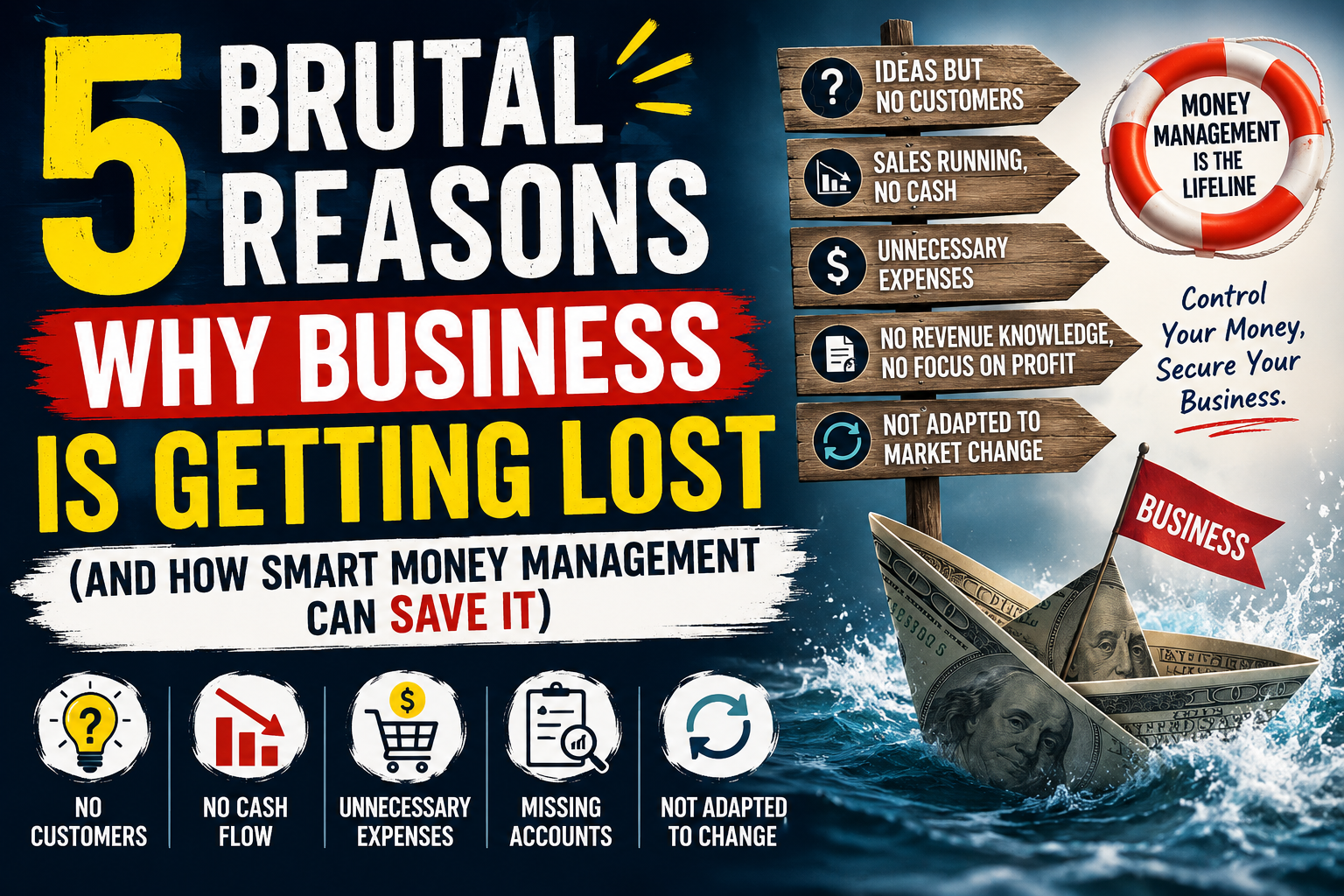
If you've ever wondered why business is getting lost, you're not alone.
I hear this question surprisingly often. A business launches with excitement, a decent product, and plenty of motivation. A year later, it's struggling. Sometimes it closes completely.
The interesting thing is that most businesses don't fail because of a lack of ideas. In fact, many business owners have great ideas. The real problem is that they don't understand why business is getting lost until it's already happening.
When people search for why business is getting lost, they often expect a complicated answer. The truth is much simpler.
Most businesses get into trouble because of poor customer acquisition, weak cash flow, unnecessary spending, bad financial tracking, and resistance to change.
Let's break it down in simple terms.
Reason #1: Having Ideas but No Customers
Ideas are exciting.
Customers are essential.
Unfortunately, many entrepreneurs confuse the two.
I've seen people spend months designing logos, creating websites, choosing business names, and planning social media posts without speaking to a single customer.
The harsh reality?
A brilliant idea with no customers is just a hobby.
Before investing heavily in a business, ask:
- Who will buy this?
- Why will they buy it?
- What problem does it solve?
- Are people already paying for similar solutions?
Many successful businesses started by solving one small problem for a specific group of people.
The market doesn't reward ideas.
The market rewards solutions.
Reason #2: No Cash Flow – Sales Are Coming In, But Money Isn't
This is one of the biggest reasons why business is getting lost.
Many business owners proudly say:
"We did ₹10 lakh in sales this month!"
Great.
But how much cash is actually available?
Sales and cash are not the same thing.
Imagine this:
- You sell products worth ₹10 lakh.
- Customers pay after 60 days.
- Suppliers need payment in 15 days.
- Salaries are due next week.
Suddenly, you're making sales but struggling to pay bills.
That's a cash flow problem.
Many profitable businesses have closed simply because they ran out of cash before payments arrived.
Some simple ways to improve cash flow:
- Track incoming and outgoing money weekly.
- Follow up on unpaid invoices.
- Avoid overstocking inventory.
- Keep an emergency reserve fund.
- Forecast future expenses.
A basic accounting software or even a well-maintained spreadsheet can make a huge difference.
Reason #3: Unnecessary Expenses That Slowly Kill Profit
This one is sneaky.
The business seems healthy on the outside.
Inside, money is leaking everywhere.
Common examples include:
Fancy Offices
Many startups rent expensive offices just to look successful.
Customers rarely care.
Expensive Vehicles
A luxury vehicle may feel rewarding, but if the business isn't generating consistent profit, it becomes a burden.
Constant Gadget Upgrades
New phones, laptops, tablets, and accessories every few months add up quickly.
Subscription Overload
Many businesses pay for tools they barely use.
Small expenses may not seem dangerous individually, but together they can destroy profitability.
A simple rule:
Before every expense, ask:
"Will this help generate revenue or improve efficiency?"
If the answer is no, reconsider it.
Reason #4: Missing Accounts and Ignoring the Numbers
Many business owners know their sales numbers.
Few know their profit numbers.
That's a problem.
Running a business without accounting is like driving at night with your headlights turned off.
You might move forward.
You just won't know what's ahead.
Important numbers every business owner should know:
- Monthly revenue
- Monthly expenses
- Net profit
- Outstanding payments
- Inventory value
- Tax obligations
I've met entrepreneurs who worked extremely hard but couldn't tell whether they were making money.
They assumed more sales meant more profit.
Sometimes the opposite was true.
Good accounting isn't just for tax season.
It's a business survival tool.
Resources like Wikipedia's accounting overview and guidance from government small-business portals can provide useful basics for beginners.
Reason #5: Not Adapting to Market Changes
The market changes constantly.
Customer behavior changes.
Technology changes.
Trends change.
Businesses that refuse to adapt often get left behind.
Think about companies that ignored:
- E-commerce
- Mobile apps
- Digital payments
- Online marketing
- AI-powered tools
Consumers evolve faster than most businesses realize.
A strategy that worked five years ago may be completely ineffective today.
Pay attention to:
- Customer feedback
- Industry trends
- Competitor activity
- New technologies
- Changing consumer habits
Adaptation isn't optional.
It's survival.
The Real Solution: Money Management
If I had to choose one skill that separates struggling businesses from successful ones, it would be money management.
Not marketing.
Not branding.
Not social media.
Money management.
Businesses that manage money well can survive difficult periods.
Businesses that manage money poorly often collapse during small challenges.
Strong money management includes:
Budgeting
Know where every rupee goes.
Emergency Funds
Unexpected expenses will happen.
Prepare for them.
Profit Tracking
Revenue looks good.
Profit matters more.
Expense Control
Keep spending aligned with business goals.
Cash Flow Planning
Know what's coming in and going out before it happens.
Many entrepreneurs find simple bookkeeping tools, accounting software, or financial planning books helpful for staying organized.
Simple Habits That Can Save a Business
You don't need an MBA to improve business finances.
Start with these habits:
✅ Review cash flow weekly
✅ Track every expense
✅ Separate personal and business finances
✅ Maintain a profit report every month
✅ Avoid unnecessary debt
✅ Build a reserve fund
✅ Listen to customers regularly
✅ Adapt to changing markets
Small improvements repeated consistently often create massive results.