What is the Strait of Hormuz and why does the world depend on it?
by Digyfindy
Tags:
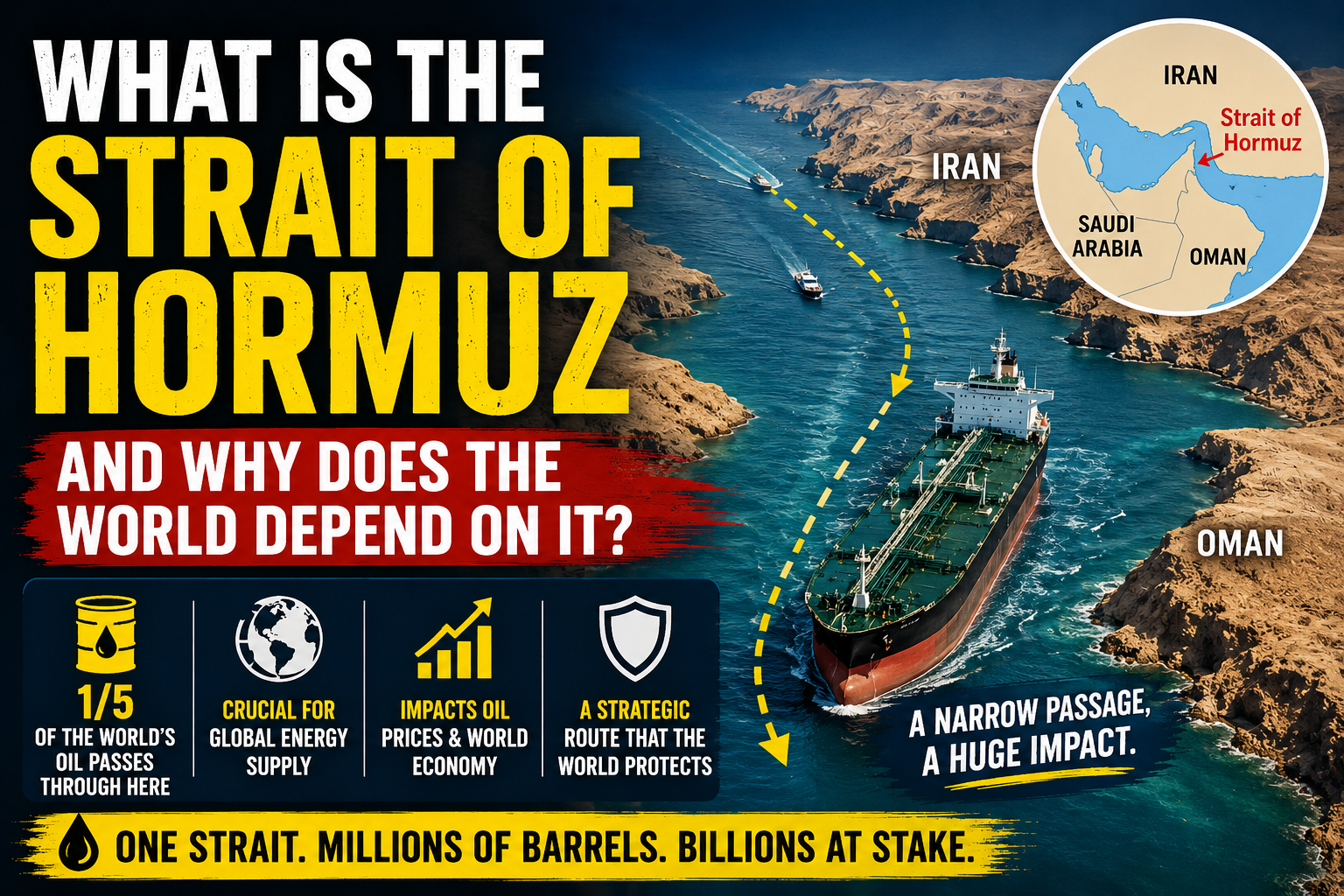
7 Important Reasons the Strait of Hormuz Matters to the Entire World
Introduction
If you’ve ever watched the news and suddenly heard experts panic about oil prices, shipping routes, or tensions in the Middle East, chances are they were talking about the Strait of Hormuz.
And honestly, for something so tiny on the map, it controls a shocking amount of the global economy.
So, what is the Strait of Hormuz, and why does the entire world depend on it so heavily?
In simple words, the Strait of Hormuz is one of the most important oil shipping routes on Earth. Huge amounts of oil and gas pass through this narrow waterway every single day. If anything interrupts that flow, fuel prices, global markets, and even everyday living costs can rise fast.
That’s why governments, oil companies, traders, and basically every country keep a close eye on it.
Let’s break it all down in the simplest way possible — no confusing geopolitical jargon.
What Is the Strait of Hormuz?
The Strait of Hormuz is a narrow water passage located between the Persian Gulf and the Gulf of Oman.
It connects major oil-producing countries in the Middle East to the rest of the world.
Think of it like a giant highway for oil tankers.
Every day, massive ships carrying crude oil and natural gas travel through this narrow route to countries across Asia, Europe, and beyond.
Without this passage, global energy transportation becomes much harder and more expensive.
You can explore its location on Wikipedia’s Strait of Hormuz page
Where Is the Strait of Hormuz Located? 🌍
The Strait of Hormuz sits between:
- Oman
- Iran
It connects:
- The Persian Gulf
- The Arabian Sea
At its narrowest point, it’s only about 33 kilometers (21 miles) wide.
Which is honestly kind of unbelievable considering how much global trade depends on it.
Imagine the world economy balancing on a narrow water route smaller than many cities.
That’s basically the situation.
Why Is the Strait of Hormuz So Important?
This is where things get serious.
The Strait of Hormuz is important because a huge portion of the world’s oil supply passes through it.
Countries like:
- Saudi Arabia
- Iraq
- Kuwait
- United Arab Emirates
- Qatar
all use this route to export energy products.
And the world still depends heavily on oil.
Cars, airplanes, factories, shipping industries — they all rely on fuel.
So when people ask what is the Strait of Hormuz, the real answer is:
It’s one of the world’s most critical energy lifelines.
How Much Oil Passes Through It? ⛽
A massive amount.
According to global energy reports, roughly one-fifth of the world’s oil consumption passes through the Strait of Hormuz.
That’s enormous.
Every single day, millions of barrels of oil move through this route.
Natural gas shipments also depend heavily on it, especially from Qatar, one of the world’s largest LNG exporters.
You can read energy trade analysis from the U.S. Energy Information Administration
What Happens if the Strait Gets Blocked?
This is the part that scares global markets.
If the Strait of Hormuz gets blocked due to conflict, attacks, or military tensions:
- Oil prices can rise rapidly
- Fuel becomes more expensive
- Shipping costs increase
- Stock markets may panic
- Inflation can worsen globally
Even rumors of disruption sometimes affect oil prices immediately.
That’s how sensitive global markets are to this region.
Honestly, it shows how interconnected the modern world has become.
A single narrow waterway can influence transportation costs thousands of miles away.
Why Countries Worry About It
Many countries depend on imported oil.
Especially:
- China
- India
- Japan
- South Korea
If oil supply slows down, economies feel pressure quickly.
That’s why powerful nations maintain military presence near the region to protect shipping routes and prevent disruptions.
It’s not just about politics.
It’s about energy security.
And energy affects almost everything:
- Electricity
- Food transportation
- Manufacturing
- Airline travel
- Daily living costs
The Strait of Hormuz and Global Politics
The region around the Strait of Hormuz has seen political tensions for decades.
Conflicts involving:
- Iran
- Western countries
- Oil-producing nations
- Military alliances
have all increased concerns about shipping safety.
Whenever tensions rise, news headlines suddenly focus on the Strait again.
And oil traders react almost instantly.
It’s one of those places where geography and global politics collide in a very direct way.
Can the World Replace This Route?
Not easily.
Some countries have built pipelines to reduce dependence on the Strait of Hormuz, but most global oil exports from the Persian Gulf still rely on this route.
That’s why experts often call it:
- A global choke point
- An energy bottleneck
- One of the world’s most strategic waterways
Even with renewable energy growing, oil still powers a huge part of the global economy today.
So the Strait remains extremely important.
Why It Matters to Everyday People
At first, the Strait of Hormuz sounds like a distant geopolitical issue.
But honestly, it affects regular people more than they realize.
If oil prices rise:
- Petrol prices increase
- Flight tickets become more expensive
- Shipping costs rise
- Product prices can go up
That means a narrow water route in the Middle East can eventually affect grocery bills or transportation costs in completely different countries.
Globalization is weird sometimes.