What is the AMOC and why scientists are worried it could collapse?
by Digyfindy
Tags:
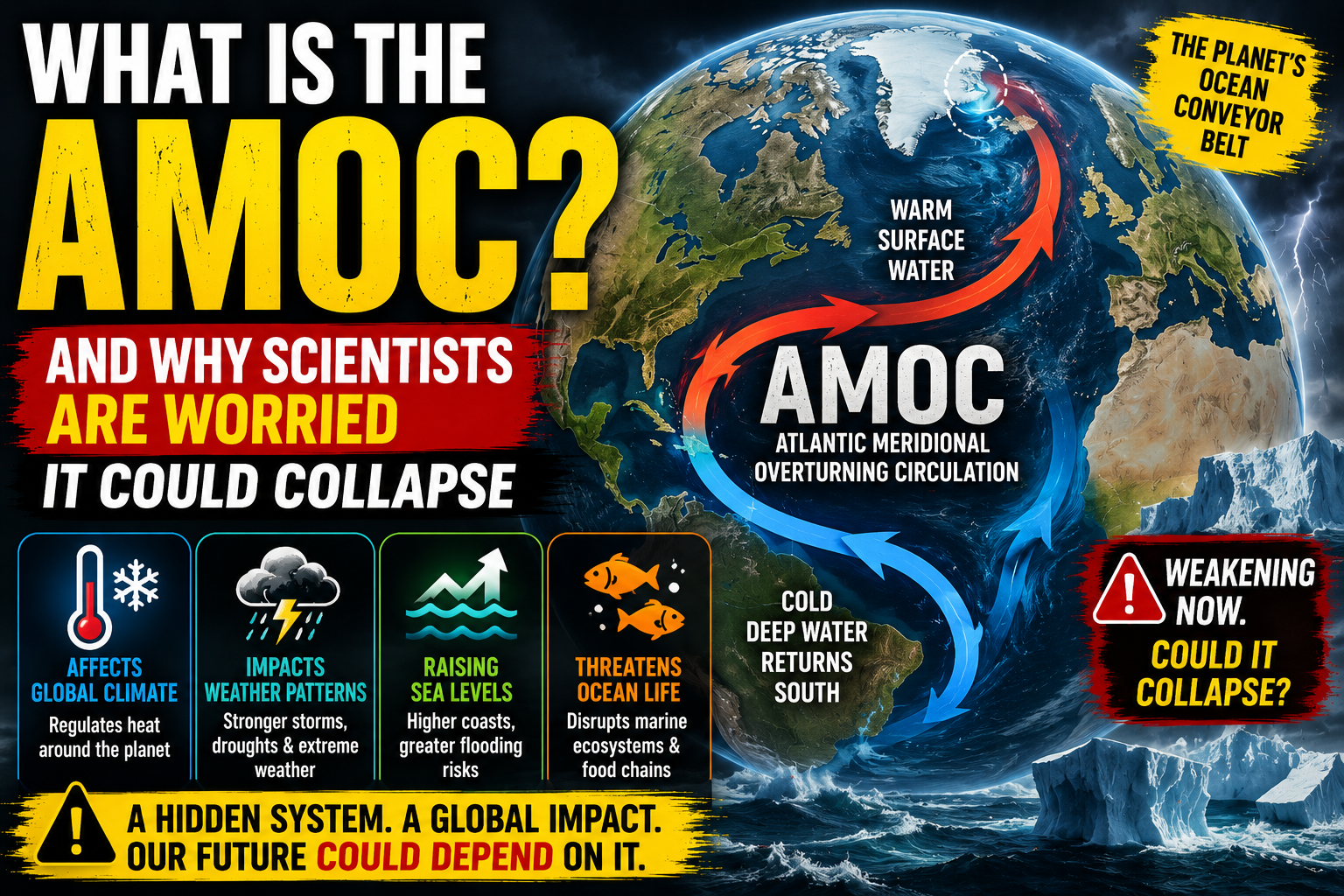
Table of Contents
- What Exactly Is the AMOC?
- Why Is the AMOC Important?
- How Does the AMOC Actually Work?
- Why Scientists Are Concerned
- What Happens if the AMOC Collapses?
- Could Europe Become Colder?
- Is This Like a Hollywood Disaster Movie?
- What Scientists Still Don’t Know
- Why This Matters to Everyday People
- Final Thoughts
- FAQs
What Is the AMOC and Why Are Scientists Worried It Could Collapse?
Introduction
You’ve probably seen dramatic headlines lately saying things like:
“The Atlantic Ocean current system could collapse.”
And honestly? That sounds terrifying.
But what exactly is the AMOC, and why are scientists suddenly so worried about it?
The AMOC, short for the Atlantic Meridional Overturning Circulation, is a giant system of ocean currents in the Atlantic Ocean. It helps move warm and cold water around the planet and plays a huge role in regulating Earth’s climate.
In simple terms, it acts a bit like a massive conveyor belt for the ocean.
The concern is that climate change may be weakening this system. And if the AMOC slows down too much — or in the worst-case scenario collapses — it could seriously affect weather patterns, temperatures, rainfall, sea levels, and ecosystems around the world.
Which sounds dramatic because… honestly, it kind of is.
But before panic sets in, let’s break this down in normal human language.
What Exactly Is the AMOC?
The AMOC is a large network of ocean currents in the Atlantic Ocean.
It moves:
- Warm water northward near the ocean surface
- Cold water southward deep underwater
This circulation helps distribute heat across the planet.
Without systems like this, Earth’s climate would look very different.
One major part of the AMOC is the Gulf Stream, which carries warm water from the tropics toward Europe.
You can read more about the AMOC on Wikipedia’s AMOC page
Why Is the AMOC Important? 🌍
Honestly, the AMOC does way more than most people realize.
It influences:
- Weather patterns
- Rainfall
- Ocean temperatures
- Hurricanes
- Sea levels
- Marine ecosystems
It’s one of the reasons parts of Europe are warmer than they otherwise would be.
Without this ocean circulation system moving heat around, climates across multiple regions could shift significantly.
And that’s why scientists pay such close attention to it.
How Does the AMOC Actually Work?
Okay, let’s simplify this as much as possible.
Warm salty water travels north through the Atlantic Ocean.
As it reaches colder regions near Greenland:
- The water cools down
- It becomes heavier
- It sinks deep into the ocean
That deep cold water then slowly moves southward again.
And the cycle continues.
Think of it like a giant moving loop inside the Atlantic Ocean.
Simple idea.
Massive impact.
Why Scientists Are Concerned 😟
Here’s where climate change enters the story.
Scientists believe melting ice from Greenland and increasing rainfall are adding more fresh water into the North Atlantic.
Fresh water is less salty.
And less salty water doesn’t sink as easily.
That matters because sinking water is one of the key drivers of the AMOC system.
So if enough fresh water enters the ocean:
- The circulation could weaken
- Ocean heat movement could slow down
- Weather systems may become unstable
This is why researchers are closely studying the possibility of an AMOC collapse.
According to climate researchers and reports from the National Oceanic and Atmospheric Administration (NOAA), evidence suggests the system may already be weakening.
What Happens if the AMOC Collapses?
This is the big scary question.
And honestly, scientists are still debating exactly how severe the effects would be.
But possible impacts include:
1. Colder Temperatures in Europe
Ironically, global warming could make parts of Europe colder if warm ocean currents weaken significantly.
Weird, right?
Climate systems are complicated.
2. Rising Sea Levels
Some coastal regions, especially along the US East Coast, could experience faster sea level rise.
That’s because ocean circulation affects water distribution across the Atlantic.
3. Stronger Weather Extremes
Scientists worry about:
- More intense storms
- Heatwaves
- Droughts
- Disrupted rainfall patterns
Agriculture and food production could also be affected in some regions.
4. Ecosystem Disruption 🐟
Ocean life depends heavily on stable temperatures and nutrient movement.
Changes in the AMOC could affect:
- Fish populations
- Marine ecosystems
- Food chains
And eventually, fishing industries too.
Could Europe Become Colder?
This is one of the most misunderstood parts of the conversation.
People hear “global warming” and assume every place simply gets hotter.
But climate systems don’t work that neatly.
If the AMOC weakens significantly, some parts of Europe could actually become cooler because less warm water would reach the region.
That doesn’t cancel climate change.
It just shows how interconnected Earth’s systems are.
Is This Like a Hollywood Disaster Movie? 🎬
Not exactly.
Movies tend to show climate disasters happening overnight.
Real life is usually slower and messier.
Scientists are not saying:
“The AMOC will suddenly stop tomorrow and freeze the planet next week.”
Instead, the concern is gradual weakening over decades that could create long-term instability in global climate systems.
Still serious.
Just less cinematic.
What Scientists Still Don’t Know
One important thing:
Researchers are still studying the AMOC closely.
There’s ongoing debate about:
- How fast changes are happening
- Whether collapse is likely
- How severe impacts could become
- How much human activity contributes
Climate science involves huge systems with many variables, so uncertainty is normal.
But uncertainty doesn’t mean scientists ignore the warning signs.
Why This Matters to Everyday People
At first glance, the AMOC sounds like one of those distant scientific topics that only oceanographers care about.
But honestly, it connects to real-world things:
- Food prices
- Weather extremes
- Flooding
- Agriculture
- Energy demand
- Coastal communities
Global climate systems affect daily life more than most people realize.
And the AMOC is one of the planet’s major climate regulators.
Related Reads
You may also enjoy:
- What Is El Niño and Why Does It Matter?
- Why the Arctic Is Warming Faster Than the Rest of Earth
- How Climate Change Impacts Ocean Life
- What Causes Extreme Weather Events?