20 Essential Life Skills Every Child Needs to Learn Before Growing Up
by Digyfindy
Tags:
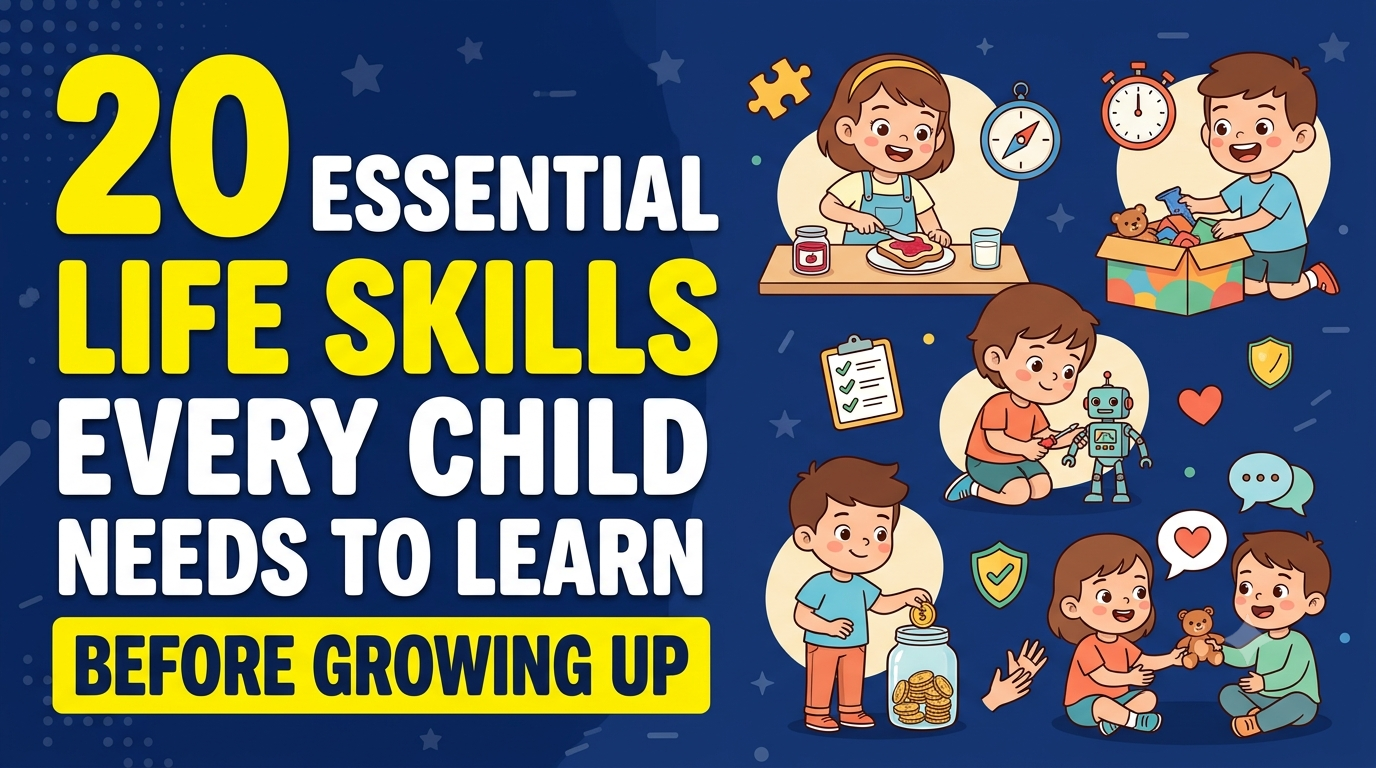
20 Essential Life Skills Every Child Needs to Learn Before Growing Up
Childhood is about more than school, toys, activities and keeping children happy. It's also about preparing them for the real world.
Think about the everyday skills we learned while growing up. Finding our way around, remembering important phone numbers, preparing a simple snack, fixing small things, helping at home and learning how to handle disappointment. These may seem like ordinary tasks, but they help children become confident, responsible and independent adults.
Today, children have access to technology, instant entertainment and plenty of convenience. Those things can be useful, but children also need opportunities to think for themselves, solve everyday problems and learn through real-life experiences.
That's why teaching life skills every child needs to learn is such an important part of parenting.
You don't have to teach everything at once. Start with small, age-appropriate tasks and allow your child to practise. Here are 20 practical life skills that can help prepare children for everyday life.
Table of Contents
-
Finding Their Way
-
Remembering Important Information
-
Learning to Be Bored
-
Fixing Things
-
Accepting "No"
-
Resolving Conflicts
-
Managing Money
-
Contributing at Home
-
Keeping Promises
-
Taking Responsibility
-
Playing Independently
-
Staying Safe Outdoors
-
Making Things Last
-
Being Resourceful
-
Speaking Respectfully
-
Waiting Patiently
-
Losing Gracefully
-
Caring About Others
-
Preparing Simple Food
-
Asking for Help
1. Finding Their Way
Children should gradually learn how to understand their surroundings instead of depending entirely on GPS or another person to guide them.
Start by helping your child notice familiar landmarks, street names, shops and important places around your neighbourhood. When you're walking together, explain where you are and how you recognize the route.
How to teach this skill:
-
Point out familiar landmarks during family walks.
-
Let your child describe the route to a familiar place.
-
Teach them to recognize street signs and building names.
-
Practise simple map-reading with age-appropriate maps.
The goal isn't to encourage young children to travel alone. It's to help them develop awareness and confidence while understanding what to do if they become separated from you.
2. Remembering Important Information
Knowing important information can make a difference in an emergency.
Children should gradually learn their full name, a parent's or trusted adult's phone number and how to contact someone who can help. Older children can also learn their home address, depending on their age and circumstances.
How to teach this skill:
-
Practise remembering one or two trusted contact numbers.
-
Teach your child how to use a phone to make an emergency call.
-
Explain which trusted adults they can approach for help.
-
Practise what they should say if they need assistance.
Make it a simple memory game rather than a stressful lesson. Also explain that personal information should only be shared with trusted people or appropriate emergency services.
3. Learning to Be Bored
Not every quiet moment needs a screen, a toy or an organized activity.
Learning to handle boredom gives children opportunities to use their imagination, explore interests and come up with their own ideas.
How to teach this skill:
-
Give your child some unstructured playtime.
-
Keep simple creative materials available, such as paper and crayons.
-
Encourage building, drawing, storytelling or pretend play.
-
Avoid immediately solving every moment of boredom.
You might be surprised by what children invent when they have the freedom to decide what to do.
4. Fixing Things
Children can learn that not every damaged or broken item needs to be thrown away immediately.
Simple repair activities can teach patience, problem-solving and respect for belongings.
How to teach this skill:
-
Help them mend a torn paper craft.
-
Show them how to put a loose toy part back in place when it is safe.
-
Teach them to organize and care for their belongings.
-
Let them help with simple household projects under supervision.
For example, a child can help tape a torn drawing or organize puzzle pieces. Leave electrical repairs, sharp tools and dangerous equipment to adults.
5. Accepting "No"
Hearing "no" can be disappointing, especially when children really want something. Learning to handle that disappointment is an important emotional skill.
It doesn't mean children should never feel upset. It means helping them understand that not every request can be accepted and that difficult feelings can be managed.
How to teach this skill:
-
Set clear and consistent boundaries.
-
Acknowledge their feelings without changing every decision.
-
Explain the reason for a boundary in simple language.
-
Help them find another acceptable activity when possible.
Instead of saying, "Stop crying, it's nothing," try saying, "I know you wanted that toy. It's disappointing, but we're not buying it today."
Children learn emotional regulation gradually through patience, guidance and practice.
6. Resolving Conflicts
Disagreements are part of everyday life. Children need to learn how to express their feelings, listen to others and find respectful ways to solve problems.
Whether they're arguing with a sibling or disagreeing with a friend, conflict resolution helps them build healthier relationships.
How to teach this skill:
-
Encourage children to explain what happened.
-
Teach them to listen without interrupting.
-
Help them use words instead of hitting or shouting.
-
Encourage fair solutions and genuine apologies.
You can also model these behaviours at home. Children learn a lot by watching how adults handle disagreements.
7. Managing Money
Understanding money is one of the most useful practical skills children can learn.
Start with simple ideas such as saving, spending, choosing between things and understanding that money is limited.
How to teach this skill:
-
Give older children a small, age-appropriate allowance if it suits your family.
-
Use a savings jar to make saving visible.
-
Let them compare prices when shopping.
-
Discuss the difference between needs and wants.
-
Help them think before making small purchases.
For example, if your child wants a toy, you can help them decide whether to spend their savings now or keep saving for something they want more.
The aim is to build thoughtful money habits, not make children anxious about finances.
8. Contributing at Home
Being part of a family means learning to contribute to everyday household responsibilities.
Children can help with simple tasks based on their age and abilities. They don't need to receive a prize every time they participate.
How to teach this skill:
-
Encourage them to put their toys away.
-
Ask them to help set the table.
-
Let them put their clothes in the laundry basket.
-
Teach them to tidy their own space.
-
Thank them for helping and acknowledge their effort.
When children see household tasks as a shared responsibility, they gradually understand cooperation and consideration for others.
9. Keeping Promises
Keeping promises helps children understand trust and responsibility.
When children say they will do something, encourage them to make a genuine effort to follow through. At the same time, teach them that it's okay to communicate honestly if something changes.
How to teach this skill:
-
Encourage them to complete small commitments.
-
Remind them to return borrowed items.
-
Help them remember plans and responsibilities.
-
Show them that adults should keep their promises too.
A simple lesson to share is: "If you say you'll do something, try your best to do it. If you can't, be honest and explain."
10. Taking Responsibility
Children become more independent when they learn to take responsibility for their own belongings and everyday tasks.
Rather than doing everything for them, give them opportunities to manage small responsibilities.
How to teach this skill:
-
Encourage them to pack their schoolbag.
-
Help them prepare their clothes for the next day.
-
Teach them to remember homework and school materials.
-
Let them organize their books and toys.
-
Encourage them to correct simple mistakes.
You can begin with reminders and gradually reduce support as your child becomes more confident.
11. Playing Independently
Children benefit from having opportunities to play without constant adult direction.
Independent play allows them to explore ideas, make choices and create their own entertainment.
How to teach this skill:
-
Provide safe, age-appropriate toys and materials.
-
Encourage pretend play and building activities.
-
Let them choose what game to play.
-
Give them time to work through small play challenges.
Independent play doesn't mean leaving children unsupervised in unsafe situations. Younger children especially need an adult nearby, even when they are playing on their own.
12. Staying Safe Outdoors
Knowing how to stay safe outside the home is an essential life skill.
Children need to understand road safety, recognize potential dangers and know when to ask a trusted adult for help.
How to teach this skill:
-
Teach them to stop, look and listen before crossing roads.
-
Show them how to use pedestrian crossings.
-
Explain why they should avoid running into roads.
-
Teach them to stay with their trusted adult.
-
Practise recognizing safe places and people to approach for help.
Always supervise young children near roads. As they grow older, practise safe routes together before allowing age-appropriate independence.
13. Making Things Last
Children should learn to take care of the things they own instead of treating everything as disposable.
This skill encourages responsibility, gratitude and thoughtful use of resources.
How to teach this skill:
-
Show them how to store toys properly.
-
Teach them to handle books and school supplies carefully.
-
Encourage reusing suitable materials for crafts.
-
Explain why wasting food, water and electricity should be avoided.
-
Help them donate or pass on items they no longer use, when appropriate.
Small habits can help children understand the value of looking after their belongings and the environment.
14. Being Resourceful
Being resourceful means learning to find solutions with the things available.
Children don't always need the newest toy or a ready-made solution. Sometimes, the best ideas come from using imagination and everyday materials.
How to teach this skill:
-
Turn cardboard boxes into pretend houses or cars.
-
Use paper and crayons to create homemade games.
-
Encourage children to find another way when a simple plan doesn't work.
-
Ask questions such as, "What else could we try?"
For example, an empty cardboard box can become a rocket, a shop or a puppet theatre.
Just make sure craft materials are safe for your child's age and avoid sharp tools or small pieces that could be swallowed.
15. Speaking Respectfully
Children need to learn how to communicate with others in a polite, confident and respectful way.
This includes greeting people, listening when someone speaks and expressing their own needs clearly.
How to teach this skill:
-
Model polite greetings and everyday manners.
-
Encourage them to say "please," "thank you" and "excuse me."
-
Teach them to express their opinions respectfully.
-
Give them opportunities to speak for themselves in appropriate situations.
-
Help them understand that respect goes both ways.
Remember, teaching respect doesn't mean teaching children to obey every adult without question. Children should also know that they can say no, express discomfort and speak up when something feels unsafe.
16. Waiting Patiently
In a world where entertainment, shopping and information are often available instantly, learning to wait is still important.
Children need opportunities to practise patience and understand that not everything happens immediately.
How to teach this skill:
-
Play simple turn-taking games.
-
Encourage waiting for a turn during family activities.
-
Let them save up for something they want.
-
Use short, realistic waiting periods.
-
Praise their effort when they manage frustration.
Start small. A young child may only manage a brief wait, while an older child can gradually practise waiting for longer periods.
17. Losing Gracefully
Winning feels wonderful, but losing is also part of learning.
Children need to understand that a game or competition doesn't always go their way. Losing can be disappointing, but it doesn't make them less capable or valuable.
How to teach this skill:
-
Play family games where everyone gets a turn.
-
Model calm reactions when you lose.
-
Encourage children to congratulate others.
-
Talk about what they enjoyed or learned from the game.
-
Remind them that trying matters more than winning every time.
A helpful message is: "It's okay to feel disappointed. You can try again next time."
18. Caring About Others
Growing into a thoughtful person involves understanding that other people have feelings, needs and experiences too.
Children can learn kindness through small everyday actions.
How to teach this skill:
-
Encourage them to help someone who needs assistance.
-
Teach them to share when appropriate.
-
Talk about how their words and actions affect others.
-
Involve them in simple community activities.
-
Encourage them to show consideration for neighbours, friends and family members.
You can also ask questions such as, "How do you think your friend felt when that happened?" This helps children practise thinking about another person's perspective.
19. Preparing Simple Food
Learning to prepare basic food helps children become more independent and understand everyday household routines.
Start with simple, safe tasks and increase responsibility as they grow.
How to teach this skill:
-
Let younger children wash suitable fruits with help.
-
Encourage them to spread a soft topping on bread using a safe utensil.
-
Teach older children to prepare a simple snack.
-
Show them how to wash their hands before handling food.
-
Encourage them to clean their workspace afterward.
Children should only use knives, appliances, hot surfaces and other kitchen equipment when they are old enough and properly supervised. Teach them about food allergies and safe food handling too.
20. Asking for Help
One of the most important lessons children can learn is that asking for help is a sign of good judgment, not weakness.
Independence doesn't mean doing everything alone. It also means recognizing when a situation is difficult, confusing or unsafe.
How to teach this skill:
-
Encourage them to ask questions when they don't understand something.
-
Teach them to approach trusted adults when they need support.
-
Explain that they should seek help if they feel unsafe.
-
Let them know they can talk to you without fear of being judged.
-
Practise what they can say when asking for assistance.
Remind your child that they don't need to handle every problem alone. Knowing when to ask for help is an important part of becoming responsible.
How to Teach Children These 20 Life Skills
You don't need to turn every day into a lesson. The best way to teach life skills is to include them naturally in everyday family life.
Here are a few simple ways to get started:
1. Start with age-appropriate tasks
A preschooler can put toys away, while an older child may be ready to prepare a simple snack. Match the task to your child's abilities.
2. Let them try before stepping in
It's tempting to do everything quickly for your child. But allowing them to attempt manageable tasks gives them opportunities to learn.
3. Make mistakes part of learning
Children won't get everything right the first time. Encourage them to try again instead of making them feel embarrassed about mistakes.
4. Be a role model
Show them how you manage money, solve disagreements, keep promises and treat others respectfully. Your everyday behaviour teaches powerful lessons.
5. Appreciate effort, not just results
Notice when your child tries something independently, helps at home or handles disappointment calmly. Encouragement can help build confidence.
6. Practise regularly
A skill becomes more familiar when children have repeated opportunities to use it. Keep practising through ordinary routines and family activities.
Frequently Asked Questions
1. What are the most important life skills for children?
Some important life skills include communication, problem-solving, emotional regulation, personal safety, money management, responsibility, basic cooking, decision-making and knowing when to ask for help.
2. At what age should children start learning life skills?
Children can begin learning simple skills during toddlerhood, such as putting toys away and helping with small routines. As they grow, you can introduce more complex tasks like managing pocket money, preparing food and planning their belongings. Every child develops at a different pace.
3. How can I teach my child to become more independent?
Give your child small responsibilities, allow them to make age-appropriate choices and let them practise everyday tasks. Offer guidance when needed, but avoid stepping in immediately whenever something becomes challenging.
4. Should children learn life skills at home or school?
Both environments can help. Schools provide opportunities to practise communication, cooperation and responsibility, while home is a natural place to learn everyday tasks such as preparing food, organizing belongings, managing money and helping with household routines.
Final Thoughts
Childhood isn't just about keeping our children happy. It's also about preparing them for life.
The ability to solve a problem, handle disappointment, manage money, help others, stay safe and ask for support can make a meaningful difference as children grow.
These lessons don't need expensive classes or complicated activities. They can begin with a small responsibility at home, a family conversation, a simple game or an everyday opportunity to try something new.
Let your children explore, make mistakes, learn and grow. Give them the guidance they need while allowing them the space to become capable individuals.
Because raising independent children isn't about teaching them to do everything alone. It's about helping them develop the confidence, judgment and kindness to navigate life.