8 Simple Ways to Make Your Toddler Feel Loved and Emotionally Secure
by Digyfindy
Tags:
8 Simple Ways to Make Your Toddler Feel Loved and Emotionally Secure
Have you ever noticed how your toddler lights up when you give them your full attention, celebrate a little achievement or simply sit beside them during a difficult moment?
Toddlers may not always have the words to explain what they feel, but they notice the little things we do every day. A warm hug, a kind word, a shared laugh or a few minutes of undivided attention can mean so much to them.
As parents, we often focus on giving our children good food, comfortable clothes, toys, education and everything they need. But one of the most important things we can give them is the feeling that they are loved, accepted and safe.
If you're wondering how to make your toddler feel loved, you don't need expensive toys, elaborate activities or perfect parenting. Small, consistent moments of connection can help build a strong relationship with your child.
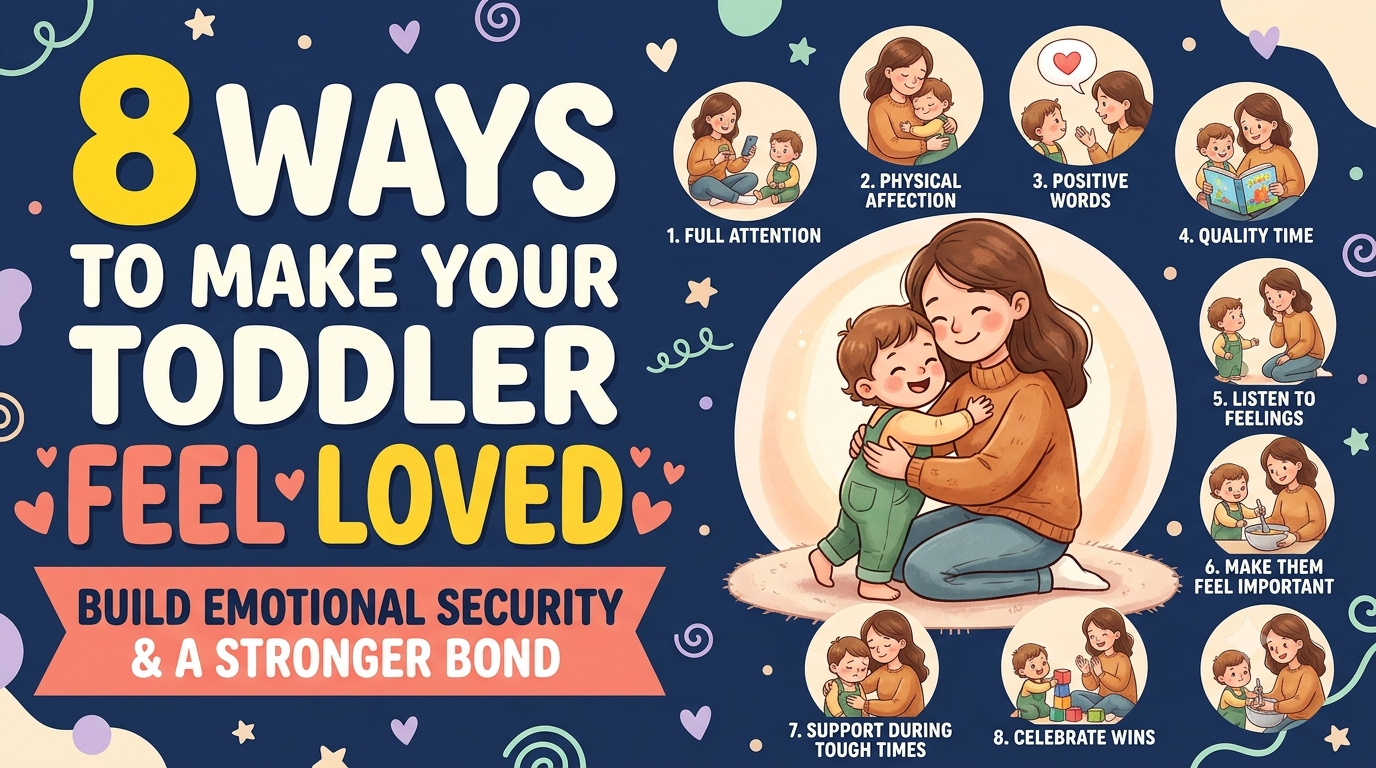
Here are eight simple ways to make your toddler feel special and strengthen your bond every day.
Table of Contents
-
Give Them Your Full Attention
-
Show Physical Affection
-
Use Positive Words
-
Spend Quality Time Together
-
Celebrate Their Little Wins
-
Listen to Their Feelings
-
Be There During Tough Times
-
Make Them Feel Important
-
Simple Daily Habits That Help Your Toddler Feel Loved
-
Frequently Asked Questions
-
Final Thoughts
1. Give Them Your Full Attention
One of the simplest ways to show your toddler love is to be fully present when you're spending time together.
Toddlers often want to show us something, tell us a story in their own little way or simply have us watch them play. Even if it seems like a small moment to us, it can feel important to them.
You don't need to spend every minute of the day playing. Just try to give your child some moments when they have your undivided attention.
Try these simple ideas:
-
Put your phone away during playtime.
-
Make eye contact when your toddler talks to you.
-
Get down to their level when they want to show you something.
-
Listen without rushing to finish what they're saying.
-
Spend a few minutes together without distractions.
For example, if your toddler brings you a toy and says, "Look, Mama!" pause what you're doing if possible and take a moment to look at it with them.
That small response tells your child, "What matters to you matters to me."
2. Show Physical Affection
A warm hug, a gentle cuddle or holding your toddler's hand can be a lovely way to express affection.
Physical affection can help children feel connected and reassured, especially when they are tired, upset or looking for comfort.
Try these simple ideas:
-
Give your toddler a warm hug when they wake up.
-
Hold their hand while walking together.
-
Offer a cuddle when they feel upset.
-
Give them a gentle back rub if they enjoy it.
-
Create a little goodnight cuddle routine.
Remember that every child has different preferences. Some toddlers love hugs, while others prefer sitting close, holding hands or simply having you nearby.
Respect your child's comfort and boundaries. Never force physical affection, even with family members. Let your toddler learn that their body belongs to them and that they can communicate when they do or don't want a hug.
3. Use Positive Words
The words we use with children can shape how they feel about themselves and their relationship with us.
Toddlers are still learning about emotions, relationships and the world around them. Hearing loving, encouraging and reassuring words can help them feel valued.
You don't need to give constant praise. Simple, genuine words throughout the day can make a difference.
Try saying:
-
"I love you."
-
"I'm happy to spend time with you."
-
"I'm proud of how you tried."
-
"You are important to me."
-
"It's okay to make mistakes."
-
"I'm here when you need me."
You can also acknowledge their effort rather than focusing only on the result.
For example, instead of saying only, "You're so clever!" when your toddler finishes a puzzle, try, "You kept trying until you found the right piece!"
Most importantly, let your child know that your love doesn't depend on good behaviour. You can correct behaviour while still making it clear that they are loved.
4. Spend Quality Time Together
Quality time doesn't have to involve expensive outings or elaborate plans.
For toddlers, ordinary activities can become special when they get to enjoy them with someone they love.
A few minutes of playing, reading or exploring together can create meaningful opportunities for connection.
Try these simple activities:
-
Read a favourite picture book together.
-
Build a tower using large, age-appropriate blocks.
-
Sing nursery rhymes and dance together.
-
Draw pictures or colour with chunky crayons.
-
Go for a short walk and notice things around you.
-
Let your toddler show you their favourite toys.
You can also follow your child's interests. If they love animals, spend time looking at animal pictures. If they enjoy music, sing their favourite songs.
The goal isn't to teach something during every activity. Sometimes, simply enjoying each other's company is enough.
5. Celebrate Their Little Wins
For adults, a small achievement might seem ordinary. For a toddler, it can be a big moment.
Maybe your child managed to put on their shoes, stack a few blocks, say a new word or try a new food. These little experiences are opportunities to show encouragement.
Try these simple ideas:
-
Smile and celebrate when they try something new.
-
Acknowledge their effort when they complete a small task.
-
Encourage them when something takes several attempts.
-
Show interest in their drawings and creations.
-
Let them know you're happy to see them learning.
You might say, "You did it! You worked hard on that tower."
Remember, the aim isn't to make children depend on praise for everything they do. It's to help them feel that their efforts are noticed and appreciated.
6. Listen to Their Feelings
Toddlers experience big emotions, but they don't always have the words to explain them.
They may cry because a toy falls, become frustrated when something doesn't work or feel upset when it's time to leave the playground.
Instead of dismissing these feelings, try to understand what your child is communicating.
Try these simple ideas:
-
Give them time to express themselves.
-
Use simple words to name their emotions.
-
Acknowledge their feelings without judging them.
-
Stay patient when they struggle to explain.
-
Help them find words for what they need.
For example, if your toddler cries because playtime is over, you could say:
"I know you wanted to keep playing. It's hard to stop when you're having fun. We can play again another time."
You don't have to agree with every reaction or change every boundary. You can recognize your child's feelings while still guiding their behaviour.
This teaches them that emotions are okay and that they can come to you when something feels difficult.
7. Be There During Tough Times
Every toddler has challenging moments. They may become tired, frustrated, overwhelmed or upset over something that seems small to an adult.
During these moments, your calm presence can help your child feel supported.
You don't need to have the perfect words or solve every problem immediately. Sometimes, your child simply needs to know you're nearby.
Try these simple ideas:
-
Stay close when your toddler is upset, if they welcome your presence.
-
Speak gently and use simple, reassuring words.
-
Offer a hug or comfort without forcing it.
-
Give them time to settle.
-
Talk about what happened once they are calmer.
For example, if your toddler has a tantrum because they cannot have something, you can maintain your boundary while saying, "I know you're upset. I'm here with you."
Being supportive doesn't mean giving in to every demand. It means helping your child navigate difficult emotions while keeping clear and loving boundaries.
8. Make Them Feel Important
Toddlers want to feel included. Giving them small opportunities to participate in everyday family life can help them feel valued.
You don't need to let them make every decision. Instead, offer simple choices that are appropriate for their age.
Try these simple ideas:
-
Ask whether they want the red shirt or the blue shirt.
-
Let them choose between two bedtime stories.
-
Invite them to help put toys away.
-
Ask which fruit they'd like from two suitable options.
-
Let them help with simple tasks such as placing napkins on the table.
You can also listen when they share their opinions, even if they're still learning how to express themselves.
For example, asking "Would you like to read this book or that one?" gives your toddler a small sense of choice and participation.
These everyday moments help children feel included while gradually learning decision-making and responsibility.
Simple Daily Habits That Help Your Toddler Feel Loved
You don't need to follow a complicated parenting routine. A few small habits can create regular opportunities for connection.
Here are some ideas you can naturally include in your day:
In the morning
-
Welcome your toddler with a smile or cuddle if they enjoy it.
-
Say something loving before starting the day.
-
Give them a little time to talk or play.
During the day
-
Spend a few minutes playing without distractions.
-
Listen when they want to show you something.
-
Encourage their efforts and small achievements.
-
Include them in simple everyday activities.
During difficult moments
-
Acknowledge their feelings.
-
Stay calm and offer reassurance.
-
Maintain boundaries with kindness.
-
Remind them that they are loved.
At bedtime
-
Read a short story together.
-
Talk about something enjoyable from the day.
-
Offer a cuddle or another comforting routine.
-
End the day with loving words.
These habits don't have to happen perfectly every day. Parenting can be busy and unpredictable. What matters is building a pattern of warmth, attention and connection over time.
Frequently Asked Questions
1. How can I make my toddler feel loved every day?
Show affection in ways your toddler enjoys, give them your attention, use encouraging words, listen to their feelings and spend time doing activities together. Small, consistent moments of connection can help your child feel valued.
2. How much quality time should I spend with my toddler?
There isn't one perfect number of minutes. Try to create regular opportunities for focused interaction throughout the day. Even short periods of distraction-free play, reading or conversation can be meaningful.
3. How do I show love to a toddler who doesn't like hugs?
Every child expresses and receives affection differently. You can show love through smiling, talking, playing, reading together, holding hands if they enjoy it or simply sitting nearby. Always respect your toddler's physical boundaries.
4. Does showing affection make toddlers too dependent?
Showing warmth and affection does not mean you have to give in to every demand. Children benefit from loving relationships alongside clear, consistent boundaries. Feeling supported can help them gradually develop confidence to explore and become more independent.
Final Thoughts
A toddler doesn't need a perfect parent, an expensive toy collection or a schedule full of activities to feel loved.
They need someone who listens, notices their little achievements, makes time for them and offers comfort when life feels overwhelming.
A few minutes of focused attention, a kind word, a shared laugh or a reassuring presence can become meaningful parts of your child's everyday life.
And remember, you won't get every moment right. There will be busy days, difficult evenings and times when you lose your patience. What matters is continuing to reconnect, offer reassurance and show your child that your love is steady.
A loved toddler doesn't have to be happy every moment. They need to know they are valued, accepted and supported, even on their hardest days.