How to Burp a Newborn: 4 Easy Positions Every New Parent Should Know
by Digyfindy
Tags:
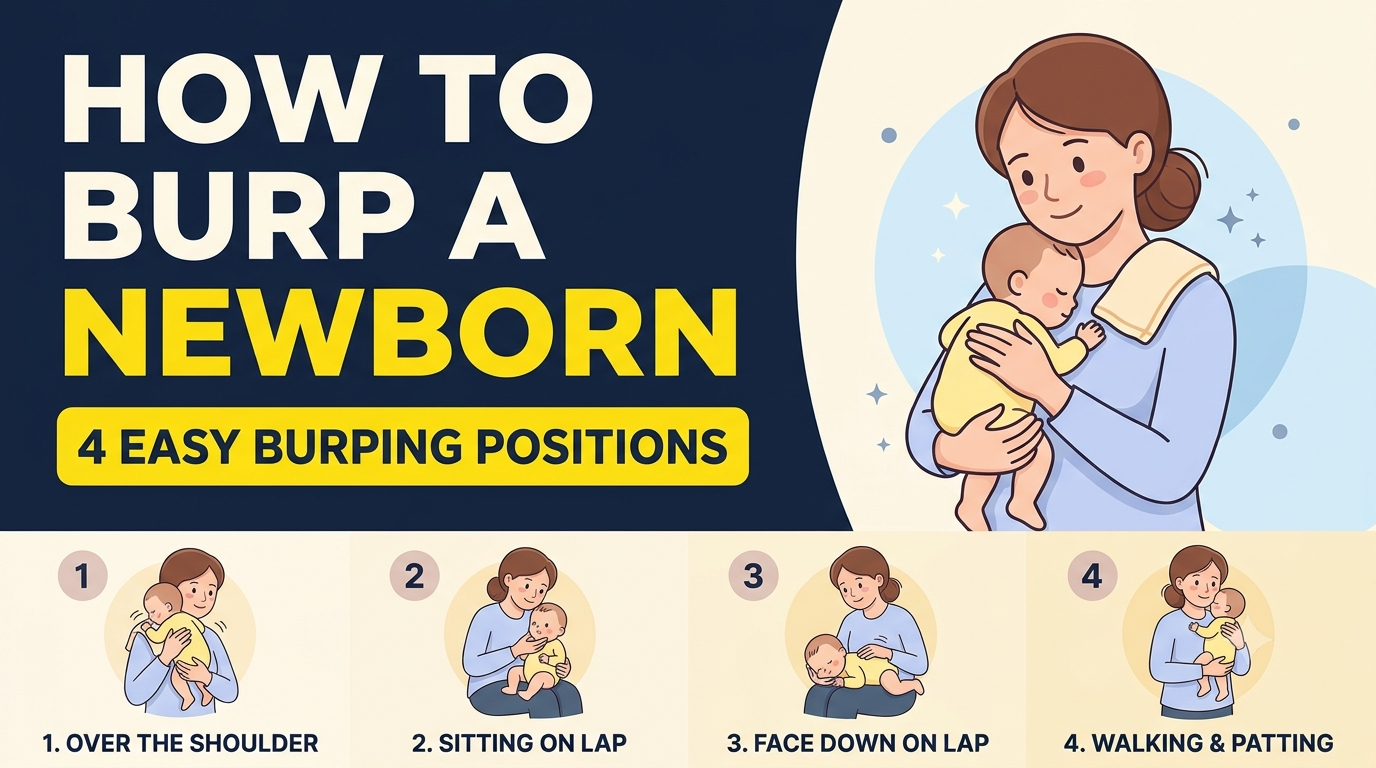
How to Burp a Newborn: 4 Easy Positions Every New Parent Should Know
Bringing your newborn home is exciting, but let's be honest—there are so many little things to learn! From feeding and changing diapers to understanding every tiny sound your baby makes, the first few weeks can feel like a whole new world.
One thing many new parents wonder about is how to burp a newborn. Should you burp your baby after every feeding? What if your little one doesn't burp? And are there different positions that make it easier?
The good news is that how to burp a newborn doesn't have to be complicated. A few gentle techniques can help release swallowed air and make your baby more comfortable after feeding.
In this guide, I'll walk you through four easy newborn burping positions, signs your baby may need to burp, and some simple tips to make the process less stressful. You don't need anything fancy—just a little patience, a comfortable position, and gentle hands.
Table of Contents
Why Is Burping Important for Newborns?
When babies drink milk, they sometimes swallow a little air along with it. This can happen during breastfeeding or bottle-feeding.
That trapped air may leave your little one feeling uncomfortable, especially if they become fussy or start squirming after a meal.
Burping helps release some of that swallowed air. It may make feeding more comfortable and help your baby settle down.
However, here's something worth remembering: not every baby needs to burp after every feed. Some babies swallow very little air, while others need a little more help.
So don't worry if your baby doesn't burp every single time. That's perfectly okay.
Signs Your Baby May Need to Burp
Newborns can't tell us what's bothering them, so we have to pay attention to their little signals.
Here are some common signs that your baby might have trapped air and could benefit from a gentle burping break.
1. Your Baby Becomes Fussy or Cranky
Was your baby feeding happily a moment ago but suddenly started crying or looking uncomfortable?
Sometimes, swallowed air can make babies feel unsettled. Try taking a short feeding break and gently burping them.
2. Squirming or Arching Their Back
If your little one starts moving around, stretching, or arching their back during or after feeding, they may be uncomfortable.
It doesn't always mean gas, but a gentle burping attempt may help.
3. Pulling Away From the Breast or Bottle
Some babies suddenly stop feeding, pull away, or seem frustrated while drinking milk.
A short break to burp can sometimes help them feel comfortable enough to continue feeding.
4. A Tight or Bloated-Looking Tummy
If your baby's tummy looks unusually swollen or feels firm, pay attention to how they're behaving.
A little swallowed air can cause discomfort, but a persistently swollen or hard tummy, especially with vomiting, poor feeding, or unusual crying, needs medical attention.
5. Gurgling Sounds
You may sometimes hear little bubbling or gurgling sounds from your baby's tummy.
These sounds are often part of normal digestion, but if your baby also seems uncomfortable, you can try burping them.
How to Burp a Newborn: 4 Easy Positions
Now comes the practical part!
There isn't just one correct way to burp a newborn. Different babies prefer different positions, so you may need to try a few before finding what works.
Here are four simple newborn burping positions you can try at home.
1. Over-the-Shoulder Position
This is probably the position most parents picture when they think about burping a baby.
It's simple, comfortable, and easy to try after feeding.
How to do it:
-
Place a clean burp cloth over your shoulder to protect your clothes.
-
Hold your baby upright against your shoulder.
-
Support your baby's head and neck securely.
-
Make sure your baby's tummy rests comfortably against your upper chest or shoulder.
-
Gently pat or rub their back in an upward motion.
Why try this position?
Your baby gets to rest against you while staying upright. It's a lovely way to combine feeding time with a little cuddle.
It's also convenient after both breastfeeding and bottle-feeding.
2. Sitting on Your Lap
Some babies prefer sitting upright rather than resting over your shoulder.
This position gives you a little more control over your baby's posture.
How to do it:
-
Sit comfortably with your baby on your lap.
-
Position your baby upright, facing sideways or slightly forward.
-
Support their chest and chin with one hand, keeping your hand away from the throat.
-
Make sure their head and neck remain supported.
-
Gently pat or rub their back with your other hand.
Why try this position?
It's useful when your baby is comfortable being held upright and you want to try something different from the shoulder position.
Just remember not to let your baby lean too far forward or put pressure on their throat.
3. Chest-to-Chest Position
Sometimes, all your baby wants is to feel close to you.
The chest-to-chest position allows your little one to enjoy that closeness while you gently help release swallowed air.
How to do it:
-
Hold your baby upright against your chest.
-
Keep their head turned to one side so their nose and mouth remain clear.
-
Support their head, neck, and upper body.
-
Gently rub or pat their back.
-
Continue holding them comfortably until they seem settled.
Why try this position?
It's a comforting way to hold your baby after feeding. The closeness can also make burping time feel like an extra bonding moment.
And honestly, those quiet little cuddles are some of the sweetest parts of having a newborn.
4. Lying Across Your Lap
If the other positions aren't working, you can try placing your baby across your lap.
This position gives you access to their back while keeping their body supported.
How to do it:
-
Sit comfortably and place your baby tummy-down across your lap.
-
Keep their head turned to one side.
-
Support their head and neck carefully.
-
Make sure their face and nose are completely clear.
-
Gently rub or pat their back.
Why try this position?
Some parents find this position convenient when their baby doesn't seem comfortable in an upright hold.
Always keep your baby supported and supervised. This is a temporary burping position, not a sleeping position.
How Long Should You Burp a Newborn?
One common question new parents ask is, "How long should I keep trying to burp my baby?"
You don't need to spend ages doing it.
A few minutes of gentle patting or rubbing is usually enough for a burping attempt. If your baby doesn't burp but seems relaxed and comfortable, you can stop.
Here are a few simple guidelines:
-
Try burping your baby during natural breaks in feeding.
-
If bottle-feeding, you can pause periodically rather than waiting until the bottle is finished.
-
If breastfeeding, you can try burping when switching breasts or after feeding.
-
If your baby seems comfortable, there's no need to force a burp.
-
If your baby is still unsettled, try another comfortable position.
Every baby is different. Some release air almost immediately, while others may not burp at all.
Helpful Tips for Burping Your Baby
A little patience goes a long way when learning how to burp a newborn.
Here are some everyday tips that can make the process easier.
1. Always Be Gentle
Your baby is tiny, so gentle movements are important.
Use soft, steady pats or slow rubbing motions. You don't need to hit their back hard to get a burp.
2. Keep a Burp Cloth Nearby
Newborns sometimes spit up a little milk during or after feeding.
Keeping a soft burp cloth over your shoulder or on your lap can save you from changing clothes every time.
A few washable cotton burp cloths are useful to keep near your feeding area.
3. Take Feeding Breaks
If your baby seems uncomfortable while drinking, pause for a moment.
A short break may give them a chance to release swallowed air before continuing the feed.
4. Try Different Positions
If your baby doesn't burp over your shoulder, don't immediately assume something is wrong.
Try sitting them on your lap or holding them upright against your chest.
You may discover that one position works better than the others.
5. Don't Force a Burp
This is important!
If your baby is calm, feeding well, and seems comfortable, there's no need to keep patting their back just to hear a burp.
A burp is helpful when needed, but it isn't a requirement after every feeding.
Newborn Burping Safety Reminders
While learning different baby burping techniques, always keep safety in mind.
Here are a few important things to remember:
-
Support the head and neck: Newborns cannot control their heads properly yet. Always provide enough support.
-
Keep the airway clear: Make sure your baby's nose and mouth aren't pressed against your shoulder, chest, or lap.
-
Use gentle movements: Avoid shaking, bouncing, or hitting your baby's back.
-
Keep your baby upright afterward: If your baby spits up or seems uncomfortable, holding them upright for a little while may help.
-
Always supervise your baby: Never leave your newborn unattended in a burping position.
-
Follow safe sleep practices: If your baby falls asleep, place them on their back on a firm, flat sleep surface. Never leave them sleeping on your chest, shoulder, or lap.
What If Your Baby Spits Up?
Don't panic if a little milk comes out while you're burping your baby.
Small amounts of spit-up are common in newborns because their digestive systems are still developing.
However, contact your baby's healthcare provider if you notice frequent forceful vomiting, green or bloody vomit, poor weight gain, feeding difficulties, or signs of dehydration.
If your baby has trouble breathing, turns blue, or becomes unusually unresponsive, seek emergency medical help.
For more information about newborn care and feeding, you can visit the American Academy of Pediatrics and the NHS guide to burping your baby.
Frequently Asked Questions About How to Burp a Newborn
1. Do I Need to Burp My Newborn After Every Feeding?
Not necessarily. Some babies swallow more air than others. You can try burping after feeding or during natural feeding breaks, but if your baby seems comfortable and doesn't burp, there's usually no need to keep trying.
2. What If My Newborn Doesn't Burp?
Don't worry! Not every baby produces a burp after every feed. Try gently rubbing their back for a few minutes. If your baby seems relaxed and comfortable, you can stop.
3. How Long Should I Try to Burp My Newborn?
A few minutes is generally enough for one burping attempt. If your baby doesn't burp after several minutes but appears comfortable, you don't need to continue.
4. Is It Okay to Put My Baby Down Without Burping?
Yes. If your baby has finished feeding and seems comfortable, it's generally okay if they haven't burped. If your baby is asleep, always place them on their back on a firm, flat sleep surface.
Final Thoughts: Every Baby Has Their Own Little Routine
Learning how to burp a newborn is one of those small parenting skills that becomes easier with practice.
Some babies burp quickly, some need a little more time, and some don't seem to need much burping at all.
Try the four positions, pay attention to your baby's signals, and see what makes them comfortable. You don't have to get everything right on the first try.
And please remember, you don't need to be a perfect parent. You're learning your baby's little habits one day at a time.
A burped baby is often a happier baby, but a baby who doesn't burp isn't necessarily uncomfortable!
You're doing an amazing job. ❤️
If you found these newborn burping tips helpful, share this guide with another new parent who might need it.
Happy parenting!