FIFA World Cup 2026 Format Explained
by Digyfindy
Tags:
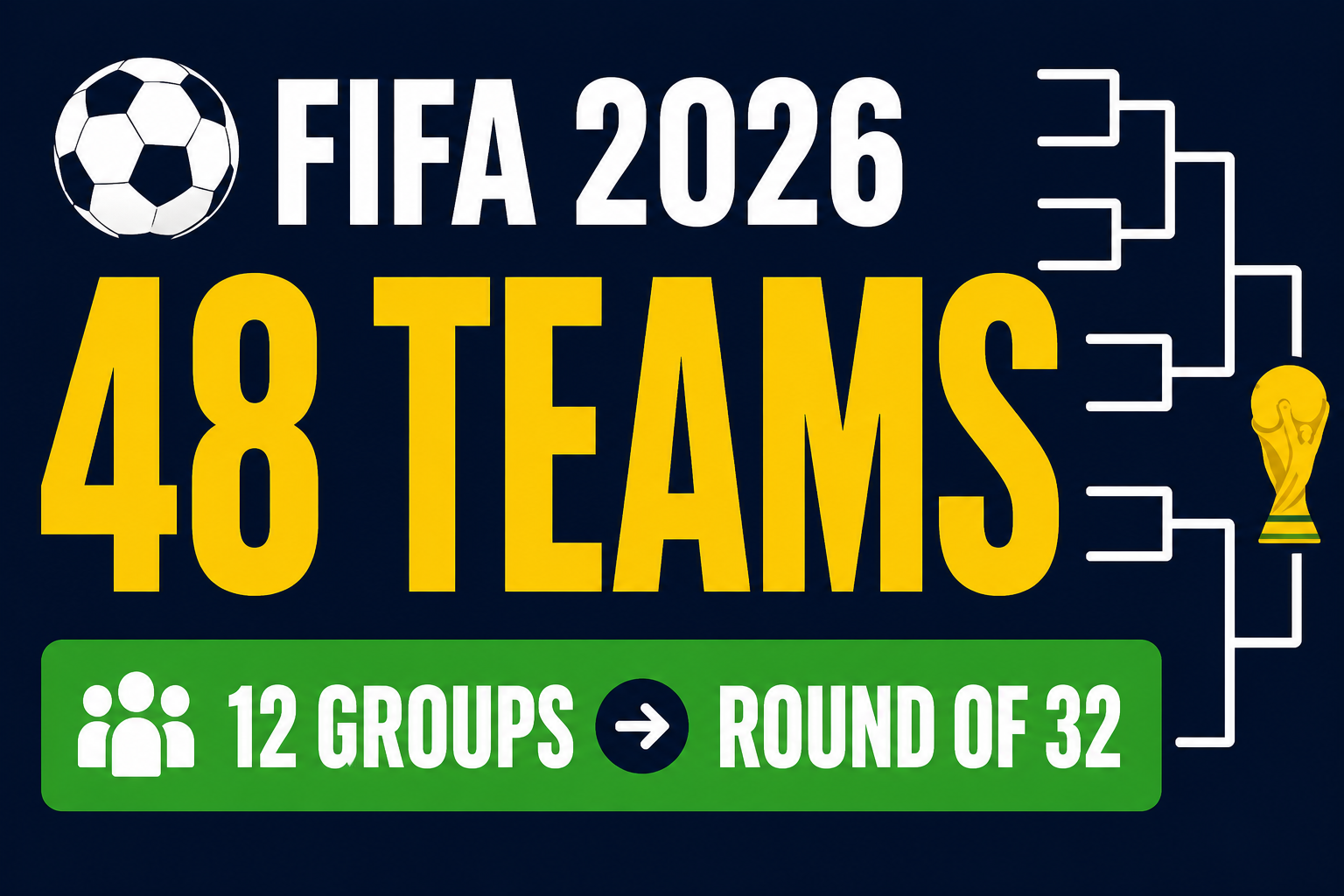
The FIFA World Cup 2026 format is unlike anything football fans have seen before.
For the first time in history, the tournament will feature 48 teams instead of 32, creating a larger, longer, and more exciting competition. While many fans are thrilled about seeing more countries participate, others are confused by the new structure.
Questions like:
- How do the groups work?
- What is the new Round of 32?
- How many teams advance?
- Can third-place teams still qualify?
have become incredibly common.
The good news is that the new FIFA World Cup 2026 format is actually quite simple once you break it down.
Let's walk through everything step by step.
Overview of the 2026 World Cup Format (Quick Summary)
Here's the entire tournament structure in one quick overview:
| Stage | Details |
|---|---|
| Teams | 48 |
| Groups | 12 |
| Teams per Group | 4 |
| Group Stage Matches | 72 |
| Teams Advancing | 32 |
| New Round | Round of 32 |
| Total Matches | 104 |
| Hosts | USA, Canada, Mexico |
The biggest change is simple:
More teams means an extra knockout round.
That's where the new Round of 32 comes in.
The Group Stage – 12 Groups of 4 Teams
The tournament begins with the group stage.
Instead of 8 groups like previous World Cups, there will be:
12 Groups
Named:
- Group A
- Group B
- Group C
- Group D
- Group E
- Group F
- Group G
- Group H
- Group I
- Group J
- Group K
- Group L
Each group contains:
4 Teams
Every team plays:
3 Matches
One against each opponent in its group.
Teams earn:
- 3 points for a win
- 1 point for a draw
- 0 points for a loss
At the end of the group stage, teams are ranked by points.
How Teams Progress from the Group Stage
This is where things change compared to previous World Cups.
From each group:
The Top Two Teams Qualify
That means:
12 groups × 2 teams = 24 teams
But the knockout stage requires 32 teams.
So where do the remaining eight teams come from?
What Happens to Third-Place Teams?
The eight best third-place teams also advance.
This means:
- 12 Group Winners
- 12 Group Runners-Up
- 8 Best Third-Place Teams
Total:
32 Teams
This system gives teams a second chance.
Even if a nation finishes third, it can still reach the knockout rounds if its overall performance is strong enough.
Fans saw a similar system in some UEFA European Championships.
The Round of 32 – A New Addition to the World Cup
The biggest innovation in the FIFA World Cup 2026 format is the introduction of the Round of 32.
Previous World Cups jumped directly from:
Group Stage → Round of 16
That won't happen anymore.
Instead:
Group Stage → Round of 32 → Round of 16
This creates:
- More knockout matches
- More drama
- More opportunities for underdogs
- More football for fans
Honestly, it's probably the change most supporters will notice.
Why Add a Round of 32?
Because 48 teams create a larger tournament.
Without the Round of 32, it would be difficult to fairly reduce the field.
The new stage ensures:
- More nations stay involved longer
- More knockout football
- A smoother transition from groups to the final
For fans, that's generally good news.
More elimination games usually mean more excitement.
The Knockout Stage Bracket (Round of 16 Through Final)
Once the Round of 32 concludes, the tournament follows a traditional knockout format.
Round of 32
32 teams
↓
Round of 16
16 teams
↓
Quarter-finals
8 teams
↓
Semi-finals
4 teams
↓
Third-Place Match
2 losing semi-finalists
↓
Final
2 remaining teams
↓
FIFA World Cup Champion
Simple.
Win and advance.
Lose and go home.
No second chances.
How Many Matches Will the Champion Play?
The World Cup winner could play:
Group Stage
3 matches
Round of 32
1 match
Round of 16
1 match
Quarter-final
1 match
Semi-final
1 match
Final
1 match
Total:
7 Matches
That's one more than champions played under the previous format.
How the 2026 Format Differs from 2022
The easiest way to understand the new format is by comparing it with Qatar 2022.
| Feature | 2022 World Cup | 2026 World Cup |
|---|---|---|
| Teams | 32 | 48 |
| Groups | 8 | 12 |
| Teams per Group | 4 | 4 |
| Knockout Teams | 16 | 32 |
| Round of 32 | No | Yes |
| Total Matches | 64 | 104 |
| Hosts | 1 | 3 |
The expansion is significant.
The 2026 World Cup will be the largest tournament FIFA has ever organized.
Benefits of the New Format
Supporters of the expansion point to several advantages.
More Countries Participate
Nations that rarely qualify now have realistic opportunities.
Greater Global Representation
More teams from:
- Africa
- Asia
- Oceania
- North America
will be involved.
More Football
Fans get:
- More matches
- More storylines
- More rivalries
- More surprises
For neutral viewers, that's a major win.
Concerns About the New Format
Not everyone loves the changes.
Some critics argue:
Quality Could Drop
Adding more teams means some weaker nations may qualify.
Longer Tournament
More matches require additional travel and scheduling.
Player Fatigue
Top players already play many matches throughout the year.
An expanded World Cup increases that workload.
These concerns continue to spark debate among fans and analysts.
Does the New Format Make the World Cup Better or Worse?
Honestly, nobody knows yet.
On paper:
Better Because:
✅ More countries qualify
✅ More knockout matches
✅ More fan engagement
✅ More global representation
Worse Because:
❌ Longer schedule
❌ Potentially weaker group matches
❌ More strain on players
The real answer will only become clear once the tournament begins.
Football fans were skeptical about previous World Cup changes too.
Many ended up loving them.