Why the Atlantic Ocean Is Becoming a Geopolitical Battleground
by Digyfindy
Tags:
For a long time, most people thought of the Atlantic Ocean as… well, just an ocean.
Big.
Important.
Historically famous.
But not exactly the center of global drama anymore.
That attention mostly shifted toward the Pacific in recent years because of China, trade wars, and tensions around Taiwan.
But suddenly, the Atlantic Ocean is back in the global spotlight.
And honestly, the reasons are bigger than most people realize.
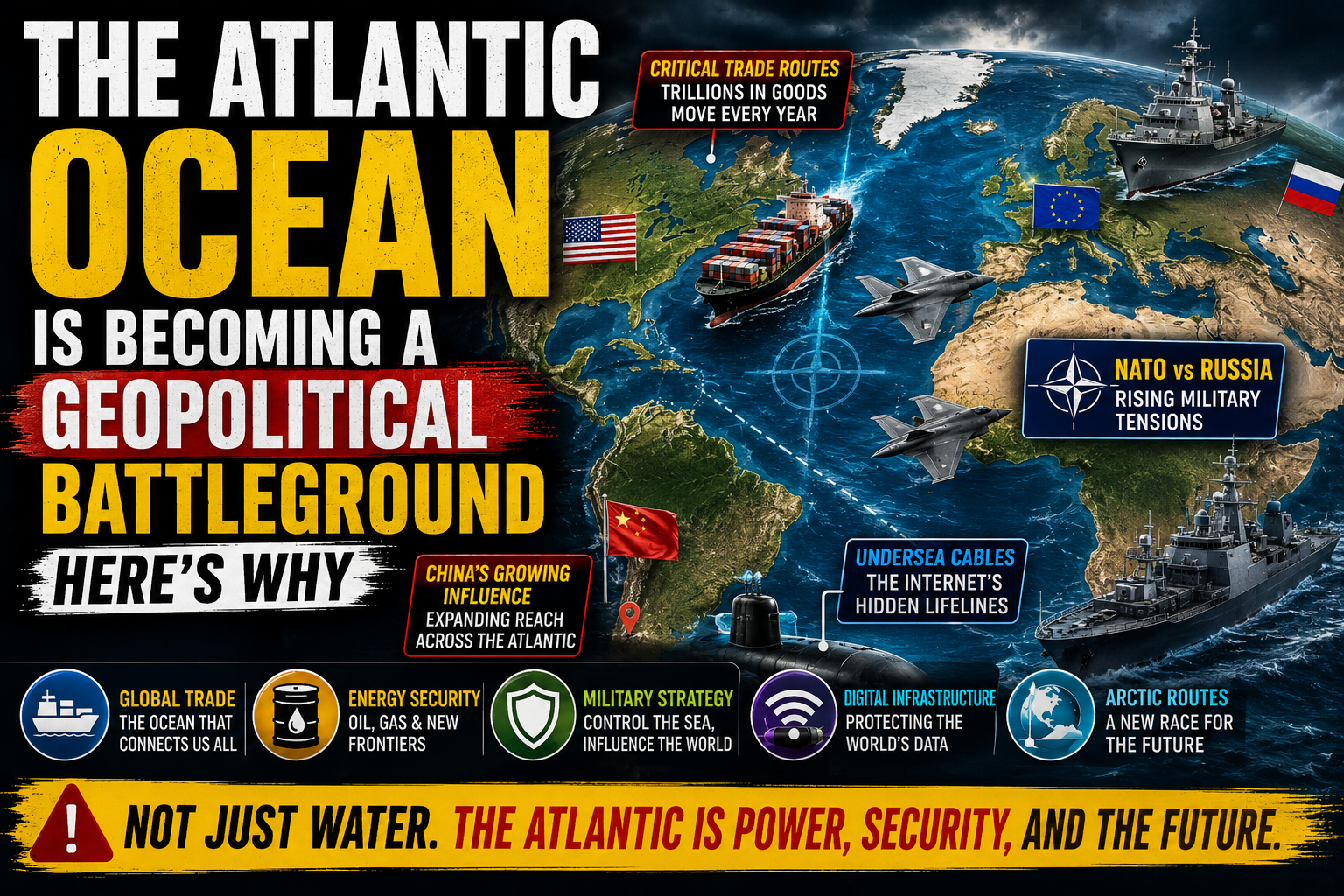
The Atlantic Ocean is becoming a geopolitical battleground because it now sits at the center of:
- Global trade
- Energy security
- Military strategy
- Undersea internet infrastructure
- Arctic competition
- Resource exploration
Basically, the Atlantic is no longer just a shipping route.
It’s becoming a strategic power zone again.
Let’s break down why governments, militaries, and global powers are paying so much attention to it.
Why the Atlantic Ocean Suddenly Matters Again 🌍
The Atlantic Ocean has always been important historically.
It connected:
- Europe
- North America
- South America
- Africa
for centuries through trade, exploration, migration, and war.
But in 2026, geopolitical tensions are making the Atlantic strategically important in new ways.
Countries now worry about:
- Supply chains
- Energy transportation
- Military access
- Internet connectivity
- Resource competition
And much of that involves the Atlantic Ocean.
The Atlantic Ocean’s Historical Importance
Historically, the Atlantic shaped modern history.
It played major roles in:
- Colonial empires
- Global trade
- The slave trade
- World Wars
- NATO military strategy
During the Cold War, the Atlantic was critical because it connected North America and Europe militarily and economically.
Now, global powers are once again treating the Atlantic as a major strategic region.
You can learn more about the ocean itself on Wikipedia’s Atlantic Ocean page
Trade Routes Make the Atlantic Extremely Valuable 🚢
One major reason the Atlantic Ocean is becoming a geopolitical battleground is simple:
Trade.
Huge amounts of global shipping move through Atlantic routes every day.
These routes transport:
- Oil
- Food
- Manufactured goods
- Natural gas
- Raw materials
Disruptions in shipping lanes can affect:
- Fuel prices
- Inflation
- Product availability
- Global supply chains
Which means ocean security suddenly becomes everyone’s problem.
Even people far from the coast feel the effects eventually.
Energy Competition Is Intensifying
The Atlantic region contains major energy resources.
Countries are competing over:
- Offshore oil
- Natural gas
- Renewable energy zones
- Deep-sea minerals
After recent global energy crises, nations became much more serious about securing energy access.
That includes protecting shipping routes and offshore infrastructure.
And honestly, energy security now shapes global politics more than many people realize.
Undersea Internet Cables Are a Huge Deal 🌐
This part surprises almost everyone.
The modern internet depends heavily on undersea cables running across oceans.
And many of those cables cross the Atlantic Ocean.
These cables carry:
- Internet traffic
- Financial transactions
- Government communications
- Global business data
Without them, modern economies would struggle badly.
Which is why countries are increasingly worried about protecting this infrastructure.
It sounds futuristic, but underwater cable security is now a real geopolitical issue.
You can read about submarine communication systems on Wikipedia’s Submarine Communications Cable page
NATO and Russia Are Watching the Atlantic Closely
Military tensions are another major factor.
NATO countries see the Atlantic as a critical strategic area connecting Europe and North America.
At the same time, Russia has increased naval activity in some Atlantic regions.
This has raised concerns about:
- Submarine operations
- Infrastructure security
- Naval competition
- Strategic shipping routes
During periods of geopolitical tension, oceans become incredibly important because they control movement, trade, and military access.
And the Atlantic is one of the world’s biggest strategic highways.
China’s Growing Interest in the Atlantic
China is geographically associated more with the Pacific, but its global economic reach is expanding everywhere — including the Atlantic region.
China has invested in:
- Ports
- Infrastructure projects
- Shipping networks
- Resource partnerships
across parts of Africa and Latin America connected to Atlantic trade routes.
That growing influence makes other global powers pay closer attention to the Atlantic too.
Geopolitics is often less about territory itself…
and more about access.
Climate Change Is Changing the Atlantic Too ❄️
Climate change is opening new Arctic shipping possibilities connected to the Atlantic region.
Melting ice may create:
- Faster shipping routes
- New resource opportunities
- Strategic competition in the Arctic
And countries are preparing early because whoever controls future trade access could gain major economic advantages.
The Arctic and Atlantic are becoming more connected strategically than ever before.
Why This Matters to Everyday People
At first glance, geopolitical competition in the Atlantic Ocean sounds distant and abstract.
But honestly, it affects regular life more than most people realize.
Ocean security impacts:
- Fuel prices
- Internet stability
- Shipping costs
- Global trade
- Energy supply
- Product prices
The modern world depends heavily on oceans.
And when global powers compete over oceans, economies and consumers eventually feel the effects too.
The Atlantic Is No Longer “Quiet”
For years, much of the geopolitical conversation focused heavily on the Pacific region.
But now the Atlantic is returning as a major strategic arena involving:
- Military alliances
- Resource competition
- Digital infrastructure
- Energy security
- Global trade routes
And this shift is likely to continue in the coming years.
Because oceans aren’t just empty water anymore.
They’re infrastructure.
They’re trade systems.
They’re strategic assets.