6 Interactive Activities to Teach Youth Groups About Child Labour
by Digyfindy
Tags:
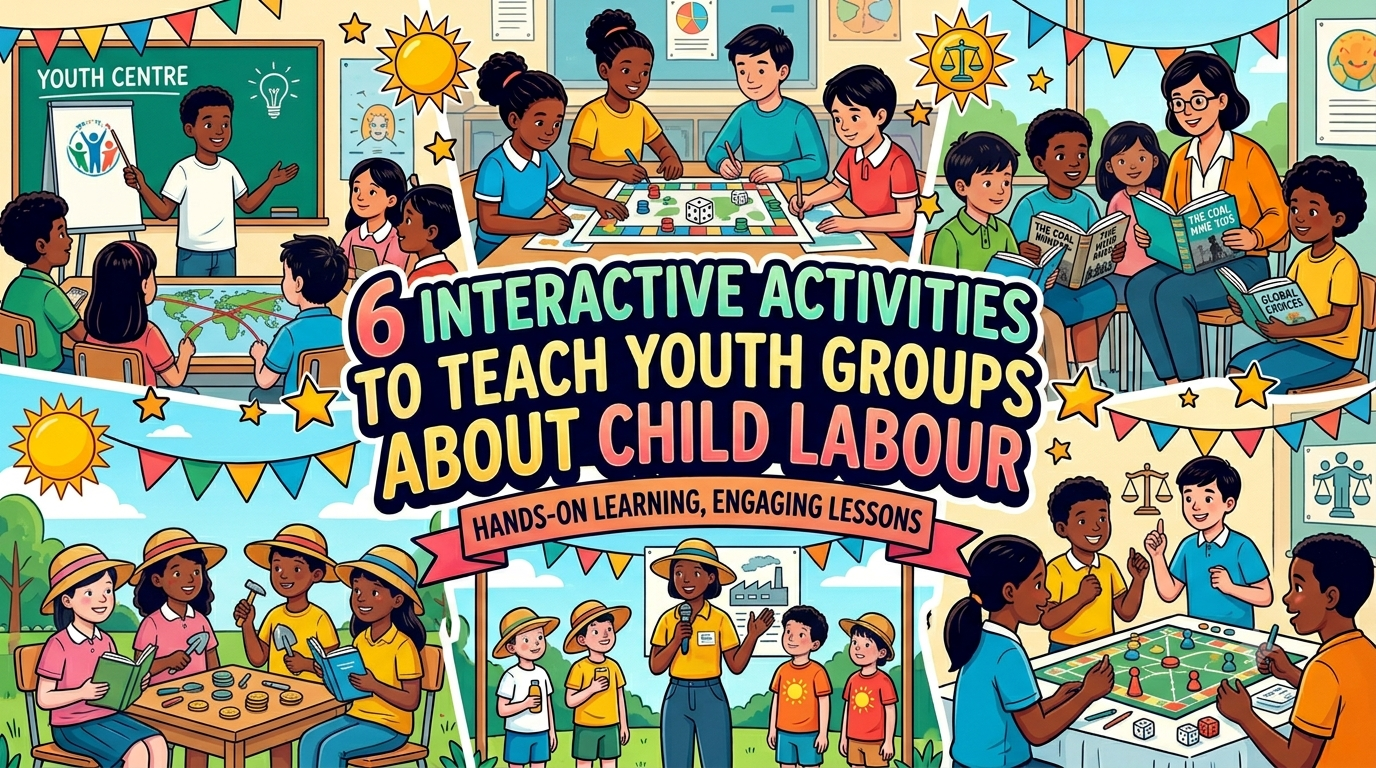
Child labour remains one of the most serious challenges affecting millions of children worldwide. While many young people have heard the term, they often struggle to understand what it means in real life. Facts and statistics are important, but they rarely leave a lasting impression on their own.
That is why interactive learning activities can be so effective. When youth groups participate in discussions, simulations, and creative projects, they gain a deeper understanding of the issue and are more likely to take meaningful action.
Whether you lead a scout troop, church youth group, community club, or student organization, these activities can help young people learn about child labour in a way that is engaging, thoughtful, and memorable.
Why Experiential Learning Works Best for Social Justice Issues
Social justice topics can sometimes feel distant or overwhelming for young people. Reading about a problem is not the same as understanding how it affects real lives.
Experiential learning helps participants connect emotionally with complex issues. Instead of simply hearing information, they actively explore ideas, solve problems, and reflect on their experiences.
Benefits include:
- Greater empathy and understanding
- Improved critical thinking skills
- Higher engagement and participation
- Better retention of information
- Increased motivation to take positive action
When discussing child labour, the goal is not to make participants feel guilty. Instead, it is to help them understand the challenges children face and explore ways they can support positive change.
High-Impact Activities and Simulations
Activity 1: The Global Supply Chain Mapping Challenge
This activity helps participants understand how products travel through global supply chains before reaching consumers.
Divide participants into small groups and assign a common product such as:
- Chocolate
- Coffee
- Soccer balls
- Clothing
- Mobile phones
Ask each group to research or map the journey of the product from raw materials to store shelves.
Discussion questions:
- How many countries were involved?
- Who performs the work at each stage?
- Where might child labour risks exist?
- How can businesses reduce those risks?
This exercise helps participants see how global markets connect consumers to workers around the world.
Activity 2: The "A Day in Their Shoes" Time Budgeting Exercise
This simulation encourages participants to think about how children experiencing labour may spend their day.
Provide each participant with a 24-hour schedule template.
Ask them to create two daily schedules:
- A typical day in their own life
- A day for a child who works long hours while trying to attend school
After completing the schedules, discuss the differences.
Questions may include:
- How much time is available for learning?
- How much time is left for rest?
- What opportunities might be missed?
- How would this affect a child's future?
This activity often leads to powerful conversations about education and opportunity.
Activity 3: The Fair Trade vs. Conventional Shopping Debate
Many young people are interested in ethical consumer choices.
Divide participants into two teams.
One team argues for choosing Fair Trade products whenever possible.
The other team explores challenges such as:
- Higher costs
- Limited availability
- Consumer awareness
After the debate, encourage participants to identify balanced solutions and practical actions consumers can take.
This activity develops research, communication, and critical-thinking skills.
Creative Advocacy Projects for Youth Groups
Activity 4: Local Community Informational Leaflet Campaign
Ask participants to design simple educational leaflets explaining:
- What child labour is
- Why it happens
- Common myths and facts
- Ways communities can help
The leaflets can be displayed at community centers, libraries, schools, or local events.
This project teaches participants how to communicate important information clearly and responsibly.
Activity 5: The "Red Card to Child Labour" Photo Advocacy Project
This activity combines creativity with awareness raising.
Participants create signs featuring messages such as:
- Red Card to Child Labour
- Every Child Deserves Education
- Childhood Is for Learning
- Protect Children's Rights
Take photos of participants holding the signs and create a display board or social media awareness campaign.
This project can generate conversations within the wider community while encouraging youth participation.
Activity 6: Child Rights Awareness Poster Exhibition
Invite participants to create posters highlighting children's rights, education, safety, and protection from exploitation.
Display the posters during:
- Community events
- Youth conferences
- School exhibitions
- Awareness days
Participants can explain their posters to visitors, helping spread awareness while building confidence and public speaking skills.
Facilitator Guide: Leading Safe and Reflective Debriefing Sessions
The discussion after an activity is often the most important part of the learning experience.
Facilitators should create a respectful environment where participants feel comfortable sharing their thoughts.
Helpful debrief questions include:
- What surprised you most?
- How did the activity make you feel?
- What did you learn that you did not know before?
- Why do you think child labour continues to exist?
- What actions can individuals and communities take?
It is important to avoid graphic or distressing content that may overwhelm younger participants.
Focus on solutions, hope, and positive action rather than fear.
Remind participants that change often happens through education, advocacy, responsible business practices, and community involvement.
Even small actions can contribute to greater awareness and support for children around the world.
Final Thoughts
Teaching youth groups about child labour does not have to involve long lectures or complicated presentations. Interactive activities help participants connect with the issue, think critically about global challenges, and discover practical ways to make a difference.
Through simulations, debates, advocacy projects, and thoughtful discussions, young people can develop empathy, awareness, and a stronger commitment to protecting the rights of children everywhere.
The goal is simple: help the next generation understand that every child deserves safety, education, dignity, and the opportunity to reach their full potential.